Doing It Yourself
Most houses in Troutman went up around 2003
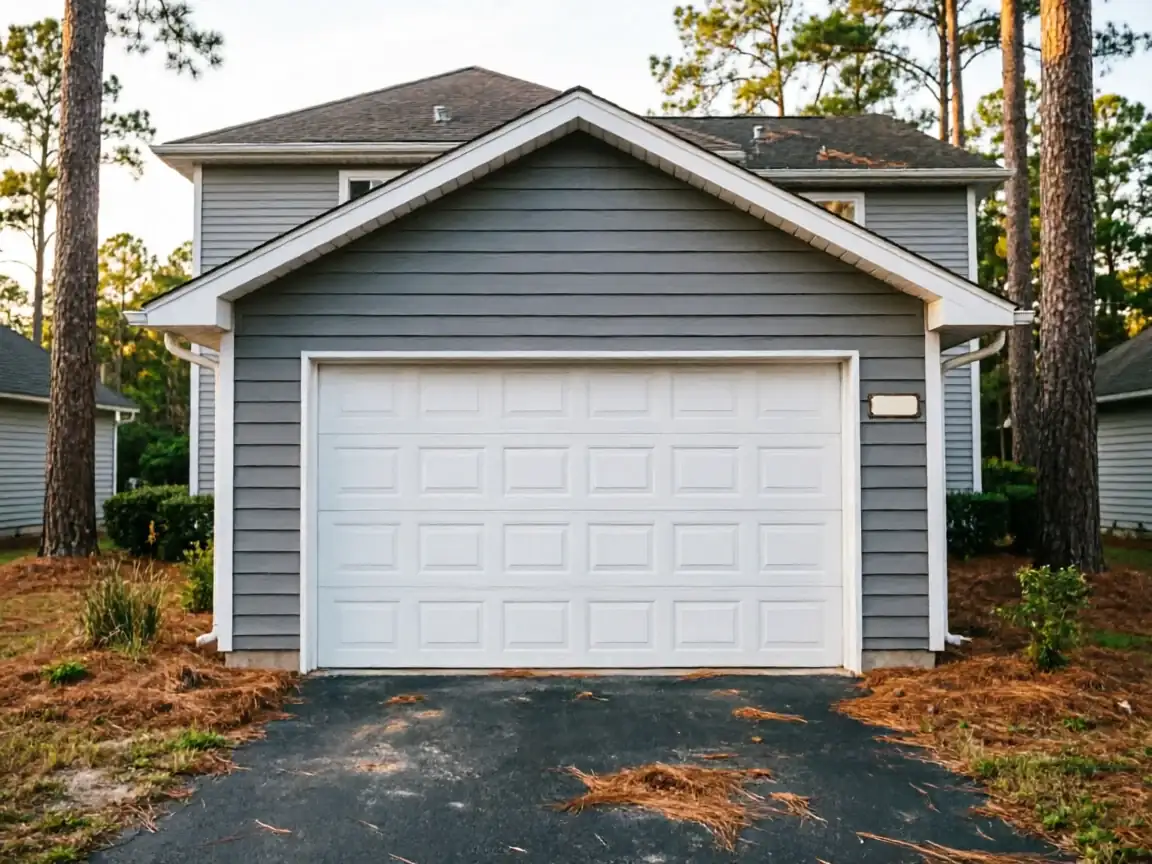
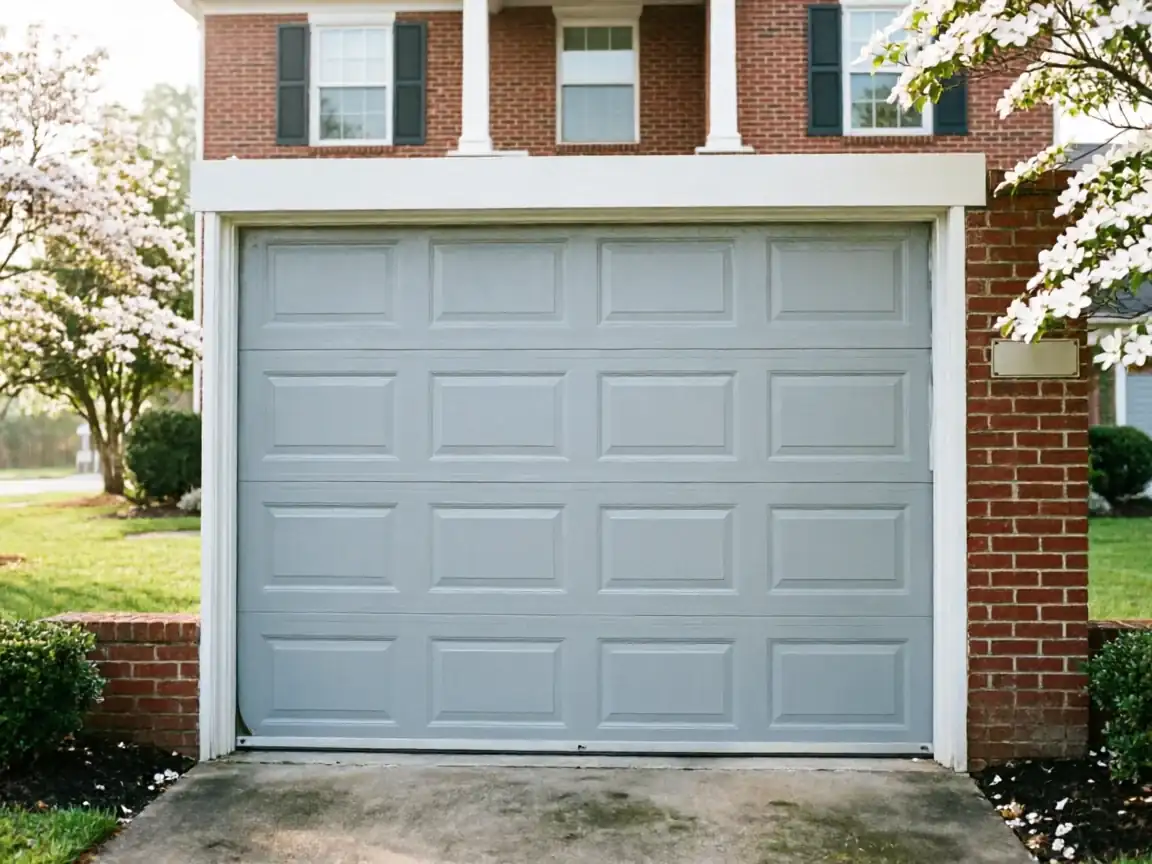
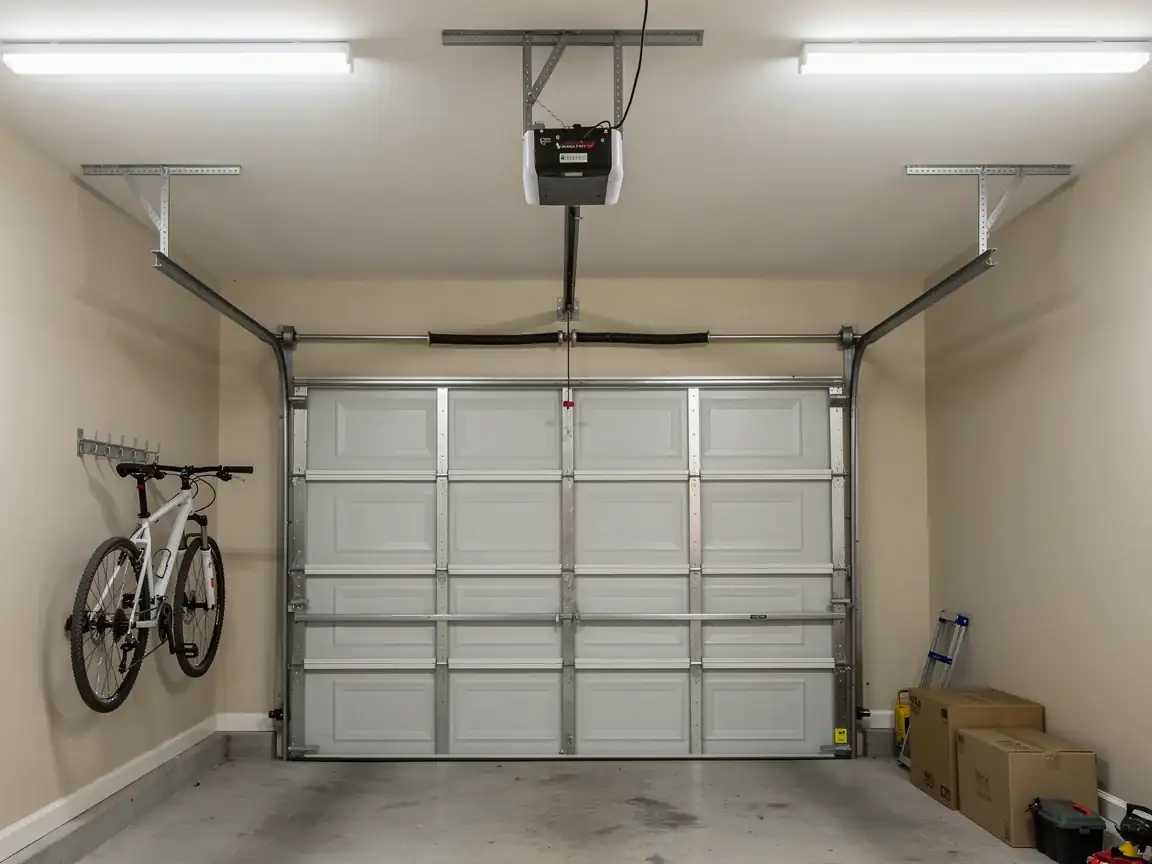
Which puts the typical garage door at a steel sectional, either a 16x7 double or a 9x7 single, hung on factory rollers and a torsion spring sized for a builder-grade panel. That's newer than a lot of the stock we see closer to Mooresville, where doors can date back to the late 1950s. A door from 2003 isn't falling apart from age the way an older one might, but it's hitting the point where the original spring has done its cycle count and the factory finish is chalking.
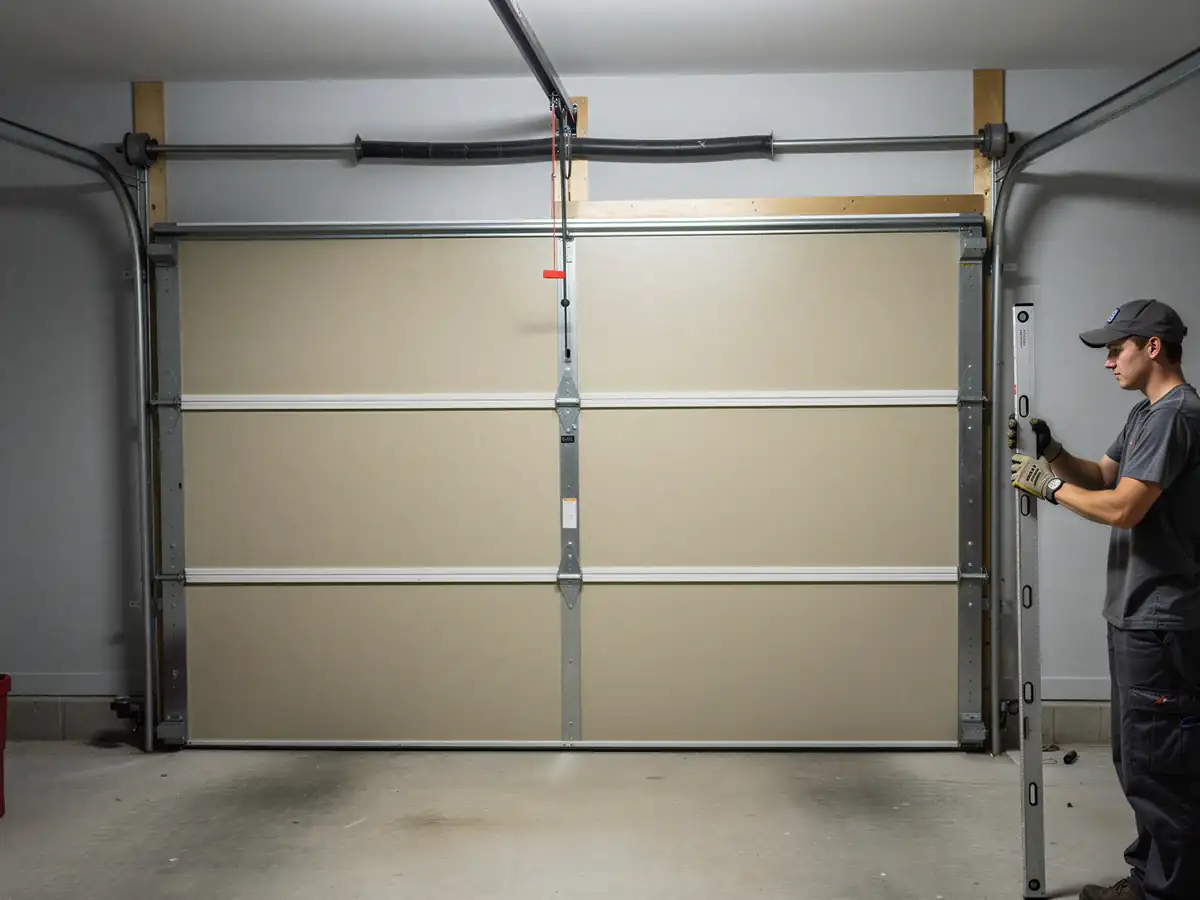
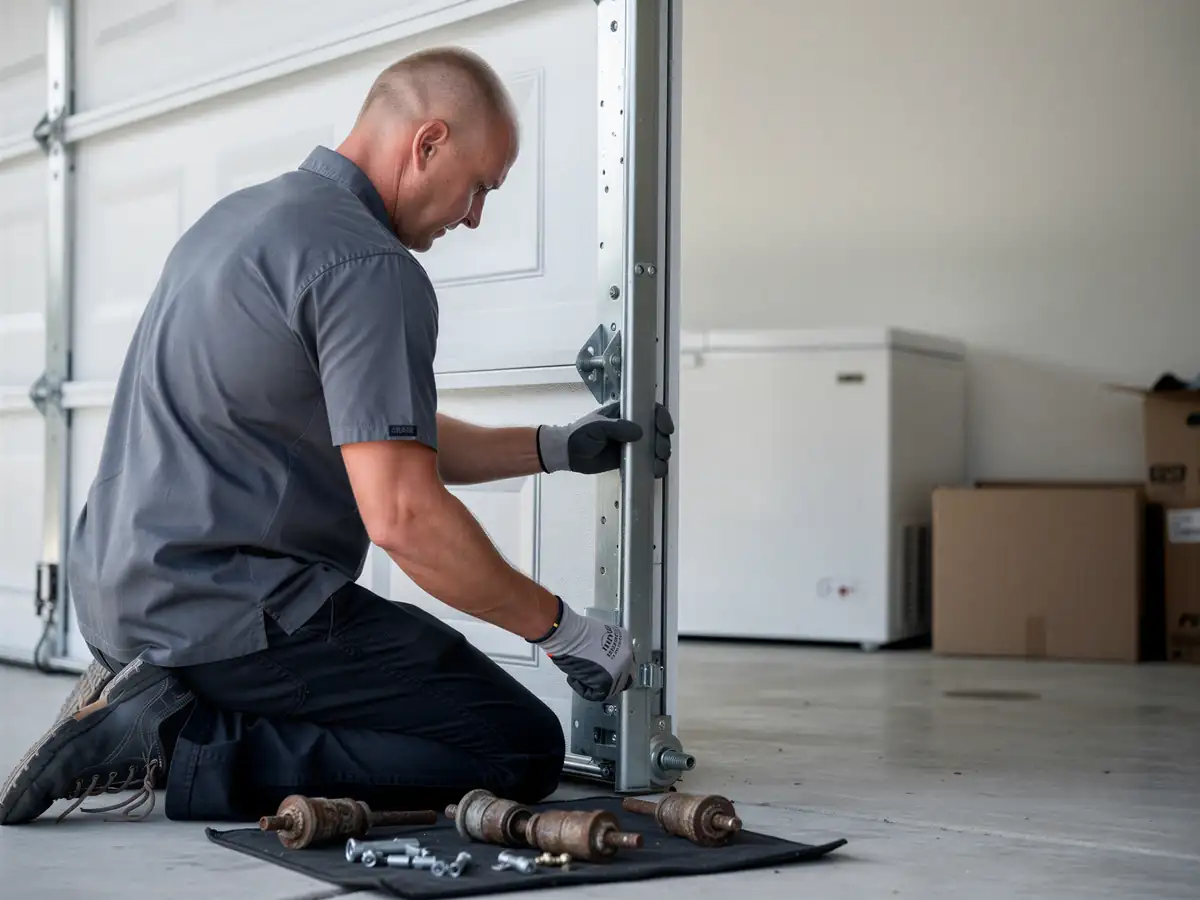
Pulling the old door and setting a new one is a two-person job with a torsion bar under heavy spring tension
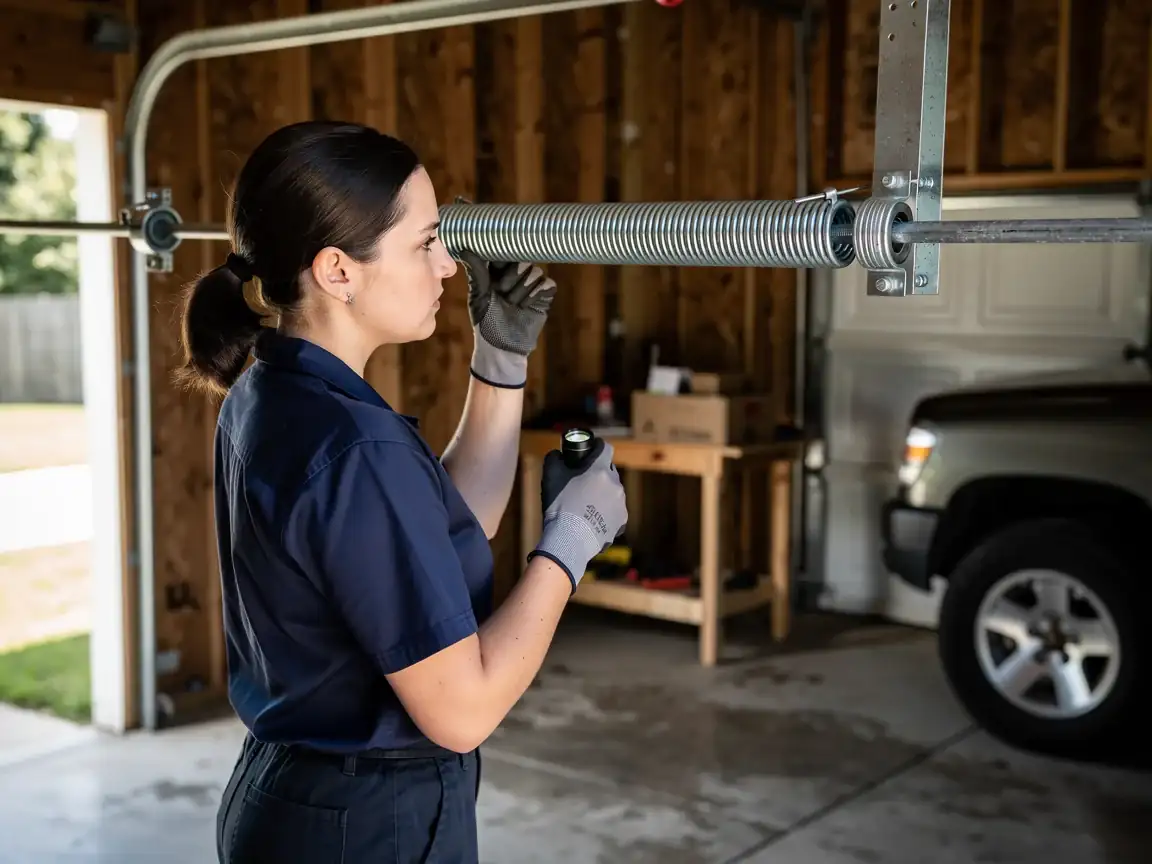
And that's where most DIY installs go wrong - not the panel work, the spring winding. If you've got a single person and a how-to video, skip the spring step and call someone, because an unwound bar under load has put people in the hospital. Measuring the opening, squaring the track, and getting the bottom seal right are all things a homeowner can do carefully. Winding a torsion spring to the correct number of turns without a wind bar and vise grips is not.
What Can Go Wrong
A door built in the early 2000s usually came with a standard-duty spring, not an upgraded one, and with household income in Troutman running higher than a lot of the surrounding area ($76,389 median), we see more owners asking for heavier insulated doors as a replacement - which means the old spring is now undersized for the new door's weight. That mismatch is the single most common reason a brand-new install fails early: right door, wrong spring left in place to save a few dollars.
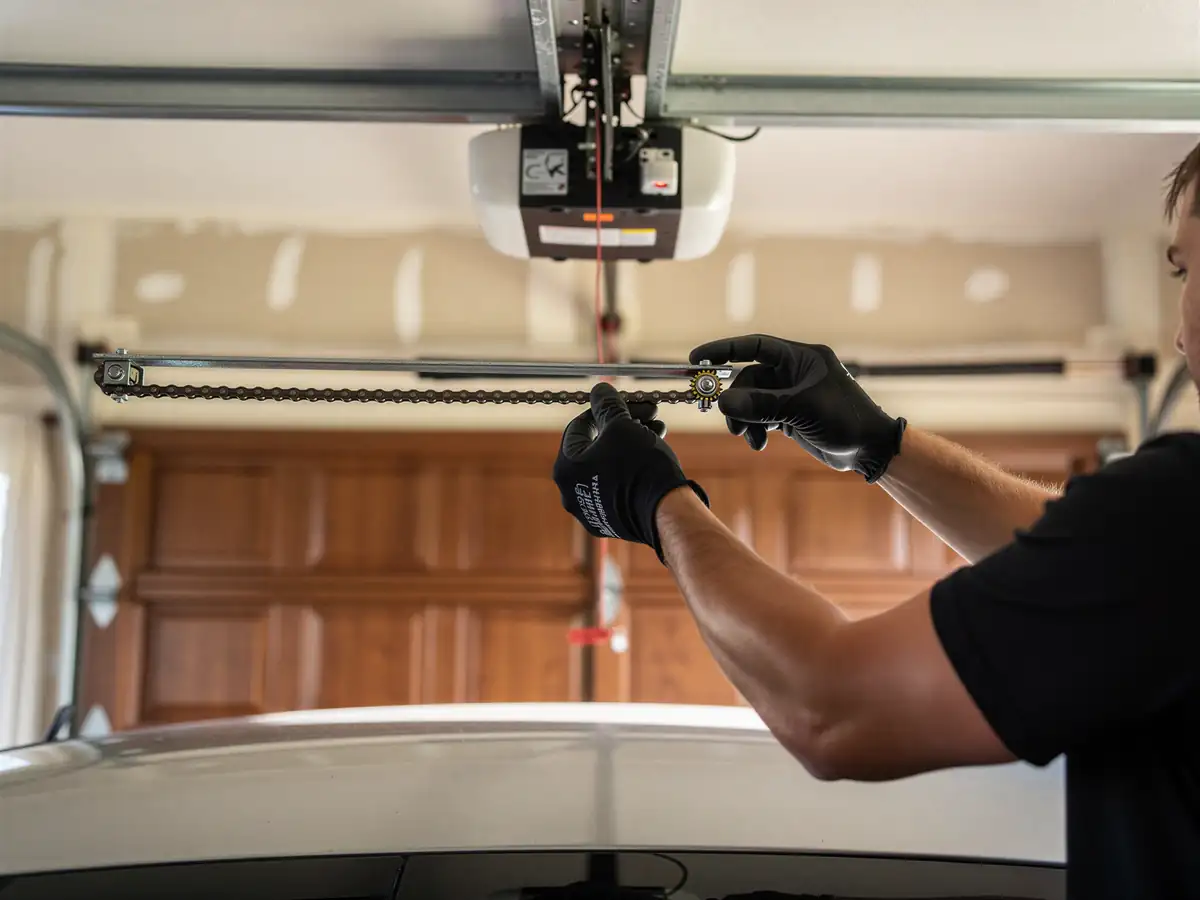
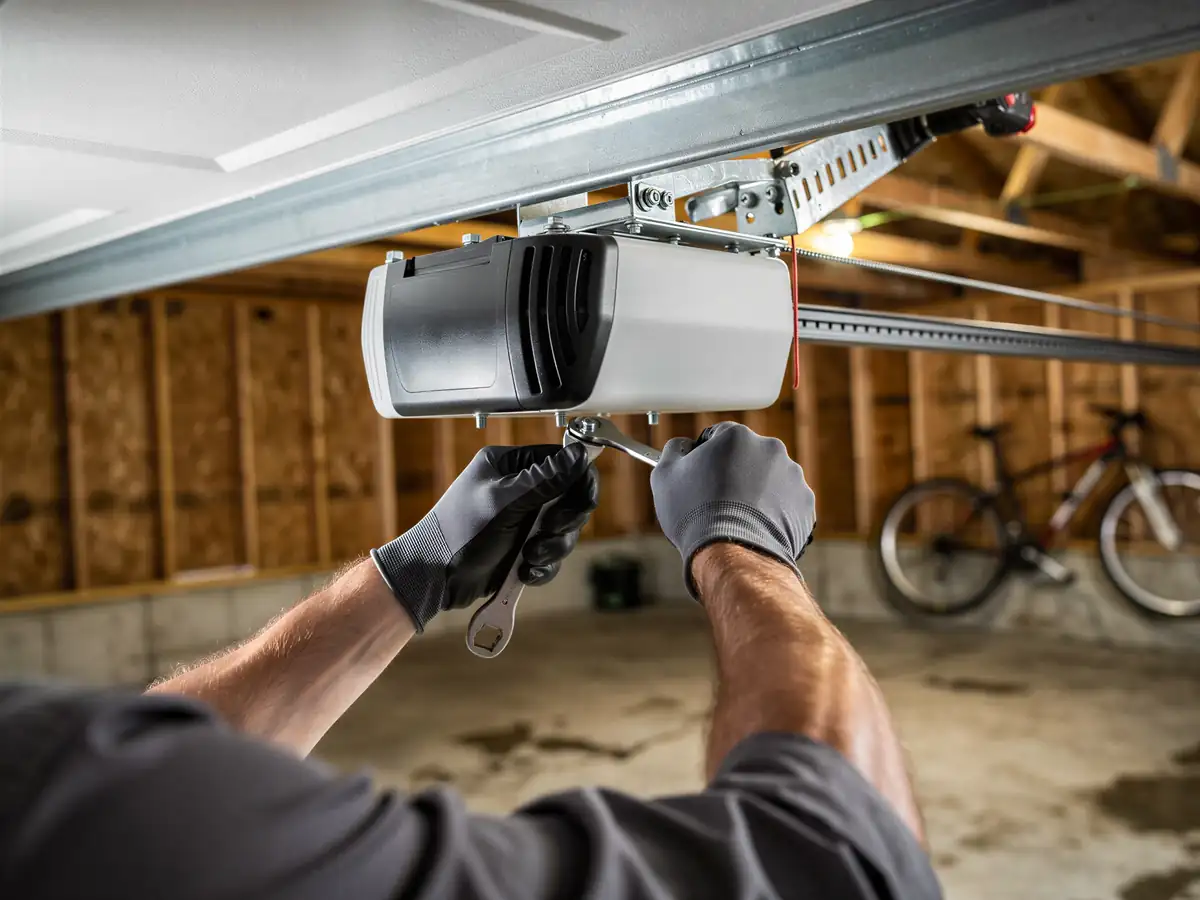
The other failure point at this age is the opener. A 2003-era opener is on its original circuit board and drive gear, and if it's still running the original chain or screw drive, the gear is usually worn enough that it's skipping teeth under load. Cold snaps make this worse - this area sits in a moderate-cold climate band, and a gear that's already marginal can shear on the first hard freeze of the season when the grease has stiffened.
Parts We Carry
We carry torsion springs sized by door weight and cycle life, not just by what fit the old one - that matters when you're upgrading from a standard builder door to a heavier insulated panel. We stock standard roller and cable sets, and openers with battery backup, which we point out more now because outages hit harder on insulated doors that rely on the opener as the primary lock point.
What we don't carry on the truck is custom panel widths or specialty finishes - those are special order, and if your opening is non-standard we'll tell you upfront rather than quote a job we can't actually deliver on the day we show up. We travel to Troutman from Mooresville, about 9 miles out, so parts come with us; nothing is staged locally. For anything outside stock sizing, expect a short lead time before the install date gets set.
How It Shows Up
On a door this age, the first sign isn't usually a dead spring
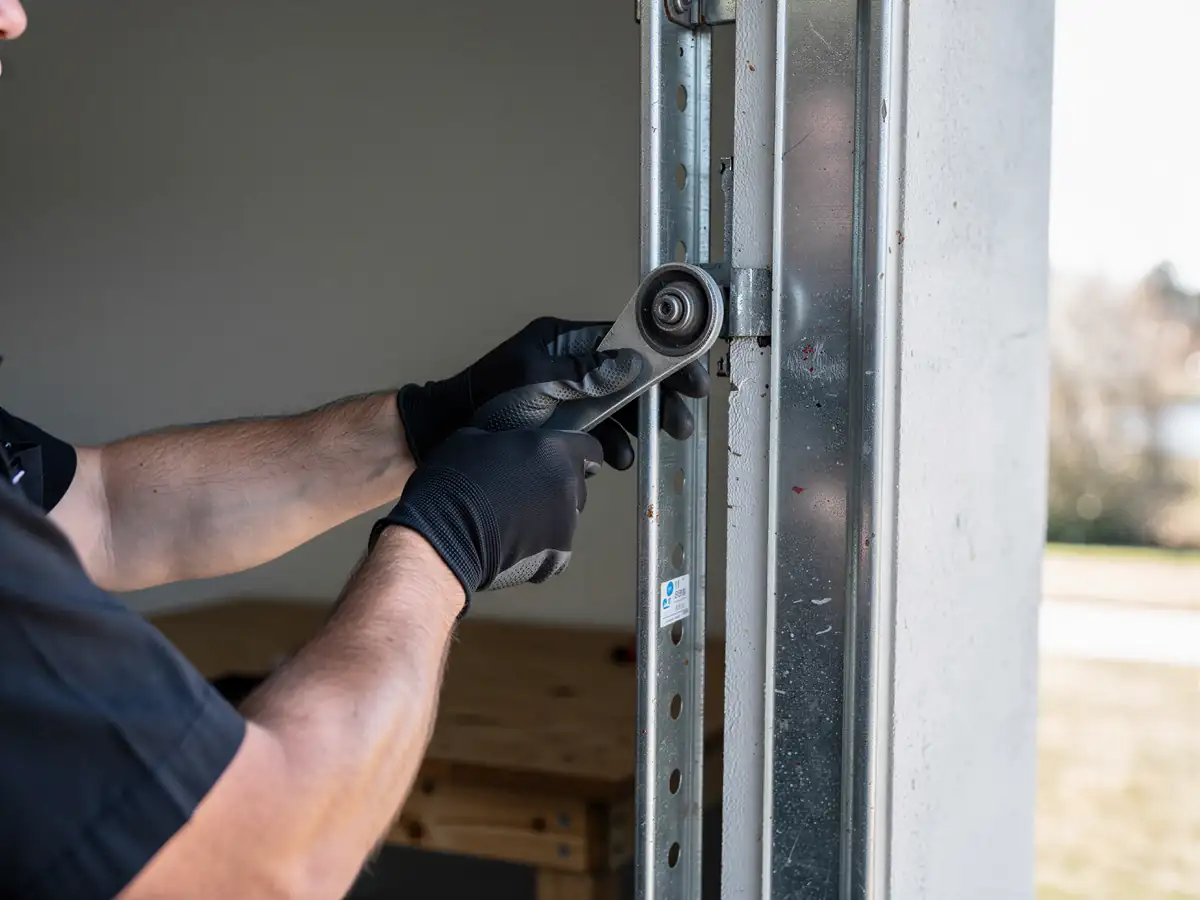
It's the door starting to lean or rack slightly in the track when it's halfway up, which means a cable has started to fray or a roller has worn its bearing out. If you hear a grinding note instead of a smooth roll, that's the roller, and it's cheap to fix if you catch it before it jumps the track.
With around 1,430 households in Troutman, we see a fairly consistent pattern
Doors original to the 2003-era build starting to show spring fatigue now, two decades in, right on schedule for a standard-duty spring's rated cycle count. If your opener is groaning louder before it moves the door than during the lift, that's usually the capacitor on the motor, not the spring - two different problems that get misdiagnosed as the same thing more often than you'd think.
- 1,430 households