What Is Going On
Most houses in this part of Mooresville went up somewhere between 1959 and 2005
With the median landing around 1996. That's a long enough stretch that your neighbor's garage door and yours might be running on completely different hardware even if the houses look the same age from the street. A door from the early end of that window is likely on an older extension-spring setup with a chain-drive opener that's had at least one motor swap by now. A door from the later end is probably on torsion springs with a screw-drive or early belt opener.
Across the eleven areas we cover, out toward Davidson, Troutman, and Lake Norman of Catawba
The bulk of the stock dates to the 1980s and 90s. That matters because that's also roughly when steel doors moved from single-layer panels to insulated sandwich construction, and when openers started picking up basic safety reversal sensors. A door built before that shift isn't dangerous by default, but it is a different animal to service than one built after it, and parts don't always cross over.
So "how old is the door" isn't really the right question on its own
The right question is which hardware generation it's from, because that's what determines whether a repair is a twenty-minute job or a losing argument with discontinued parts.
How Local Conditions Play In
Mooresville sits in a cold-moderate climate band, which is a milder range than true northern winters but still enough to put real freeze-thaw cycling on a garage door every year. That cycling is harder on steel than people expect. Panel seams expand and contract, galvanized coatings on older 1960s and 70s hardware start to show pitting at the stress points, and nylon rollers stiffen up in a way that makes the whole door sound rough even when nothing is actually broken.
The age of the door changes how it handles that stress. Doors from the earlier end of the 1959-2005 range were built with lighter-gauge steel and simpler weatherstripping, so they telegraph temperature swings faster. You'll hear it in the track before you see it in the panel. Doors from the 1990s and later generally have better seals and heavier gauge steel, so the same winter swing shows up later and smaller.
With 32,664 households in the service area and 17,817 of those owner-occupied, there's a lot of original equipment still in garages that's seen twenty or more of these freeze-thaw cycles. None of that means a door needs replacing on a schedule. It means the symptoms of normal aging here look like noise, drag, and slow response before they look like anything dramatic.
When to Get Help
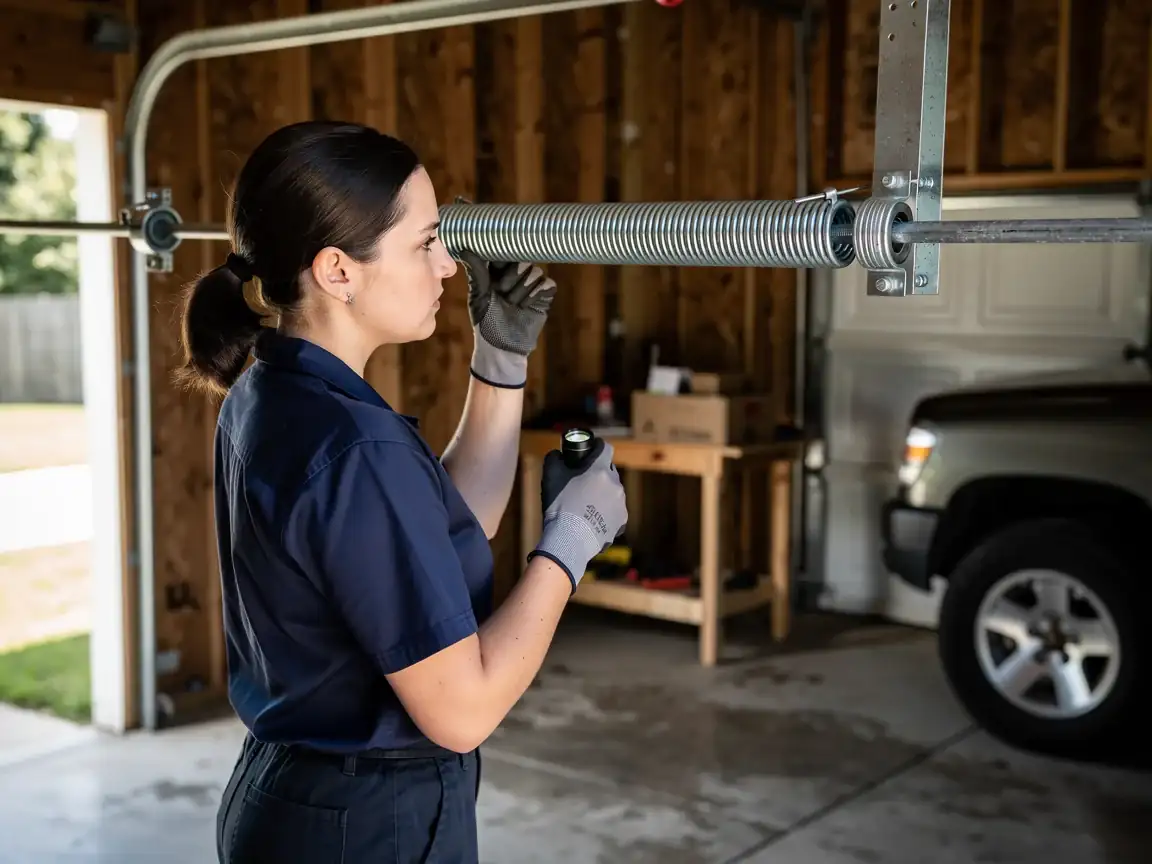
A door that's hard to lift by hand, drops fast on the way down, or makes a loud bang partway through its travel usually means a broken or weakening torsion spring, and that's not a project to leave for later regardless of the door's age. A door that's visibly off-track, or that one side closes faster than the other, points to a cable or roller problem that gets worse the longer it runs.
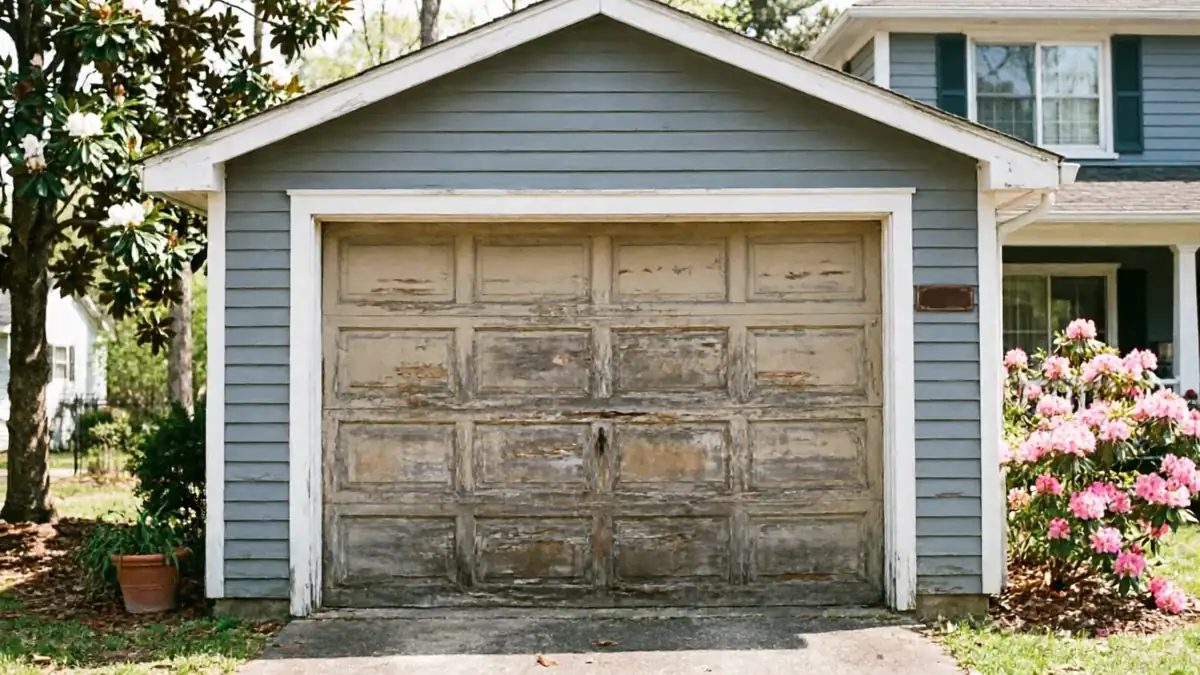
For doors from the earlier part of the 1959-2005 range, cracked or warped panels and openers with no safety reversal are worth a second look even if the door still functions, since replacement parts for that generation aren't always stocked anywhere nearby. For doors from the 1990s and later, most issues are springs, openers, or weatherstripping, and those are usually straightforward repairs rather than a reason to replace the whole unit.
We'll be honest about where the line is: once a door needs a new bottom panel, new springs, and a new opener all at once, the labor and parts cost on an original door from that older stock usually runs close enough to a new door that replacing makes more financial sense. We won't talk you into fixing something past that point just to make the call.
The Seasonal Bit
In a cold-moderate climate like Mooresville's
The hardest stretch on a garage door isn't the coldest week of winter, it's the swing days on either side of it, when the temperature moves 20 or 30 degrees in a day and the steel, the lubricant, and the weatherstripping all expand and contract at different rates. That's when you hear new noises from a door that was quiet all summer.
Older doors from the 1959-1980s stretch of local housing feel this more
Since their seals and coatings have had decades of cycles to wear down. Lubricant that was fine in August gets stiff in a cold snap and the opener has to work harder to pull the door through its track, which is often what makes an aging opener finally quit in winter rather than summer.
This isn't a reason to panic every time the weather turns
It's a reason to pay attention to a door that suddenly sounds different after a cold snap, especially if the house is on the older end of the 1959-2005 range. That's usually the first real sign that something is worth looking at before it becomes a Saturday morning no-start.