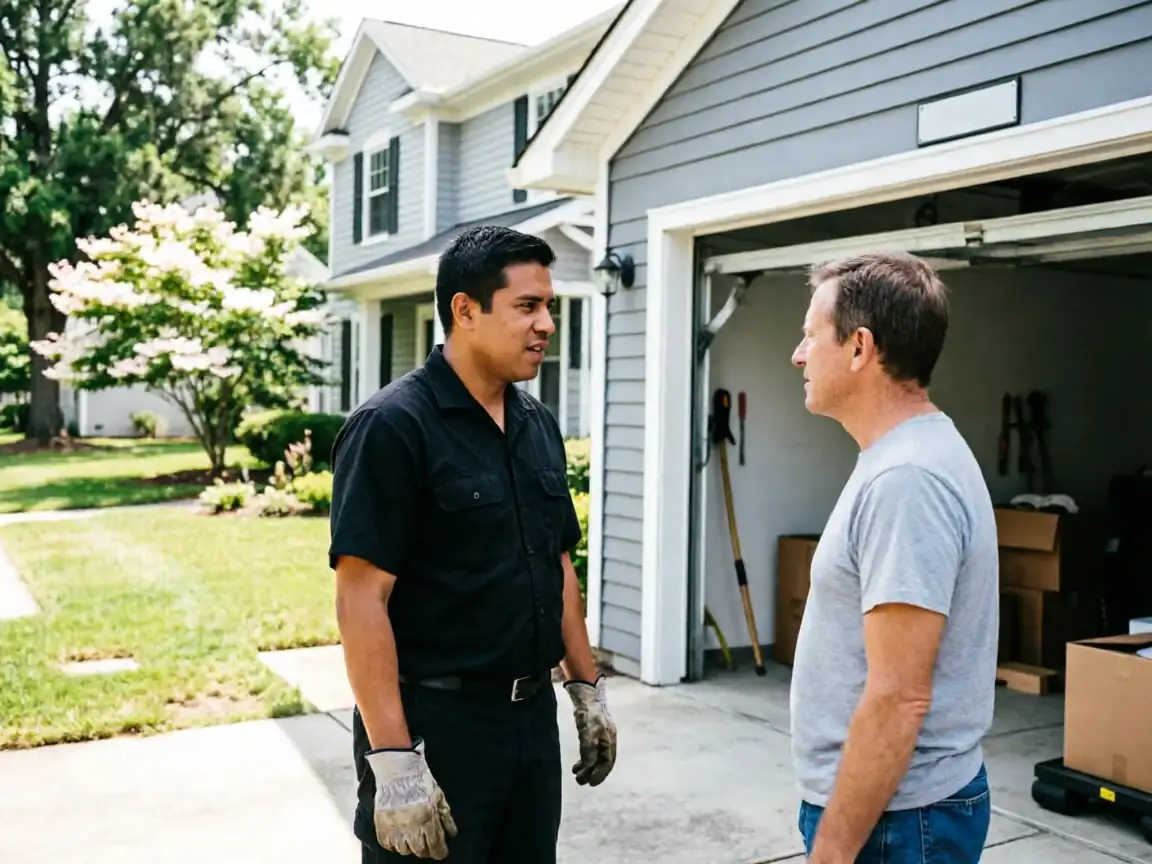
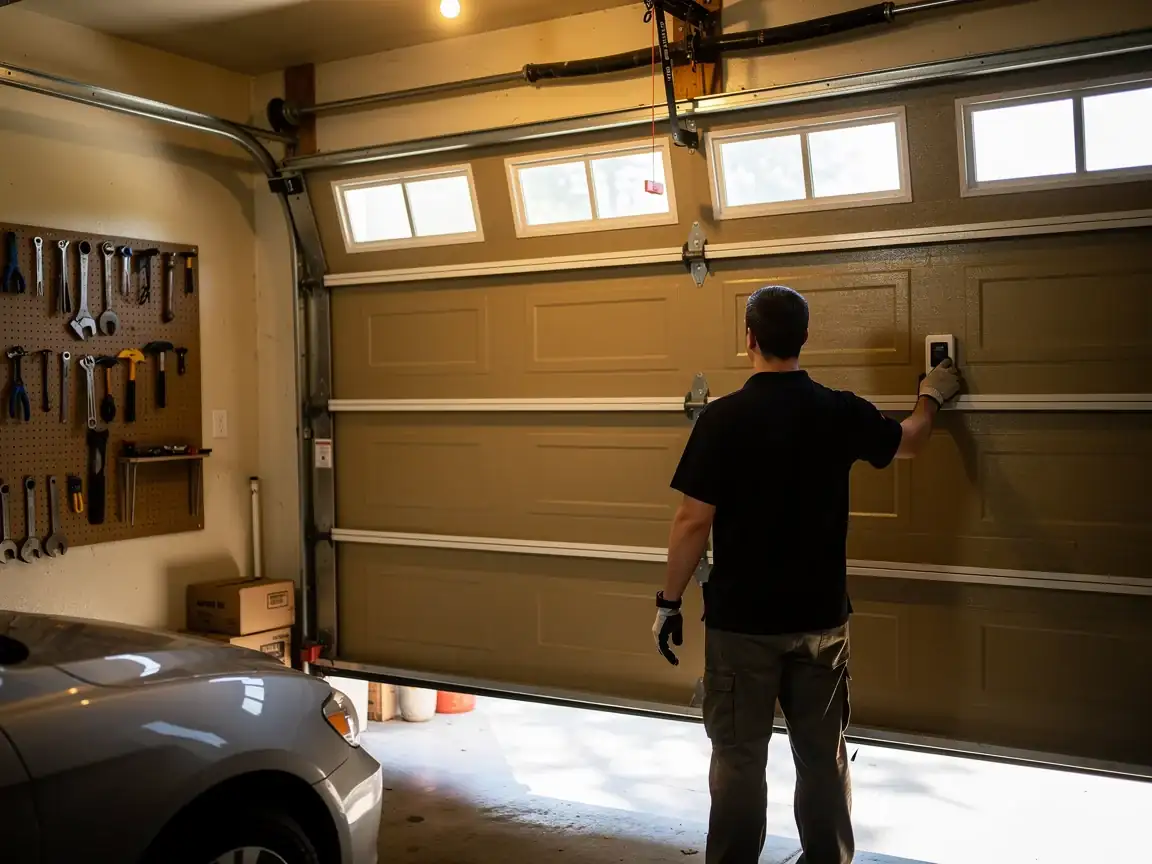
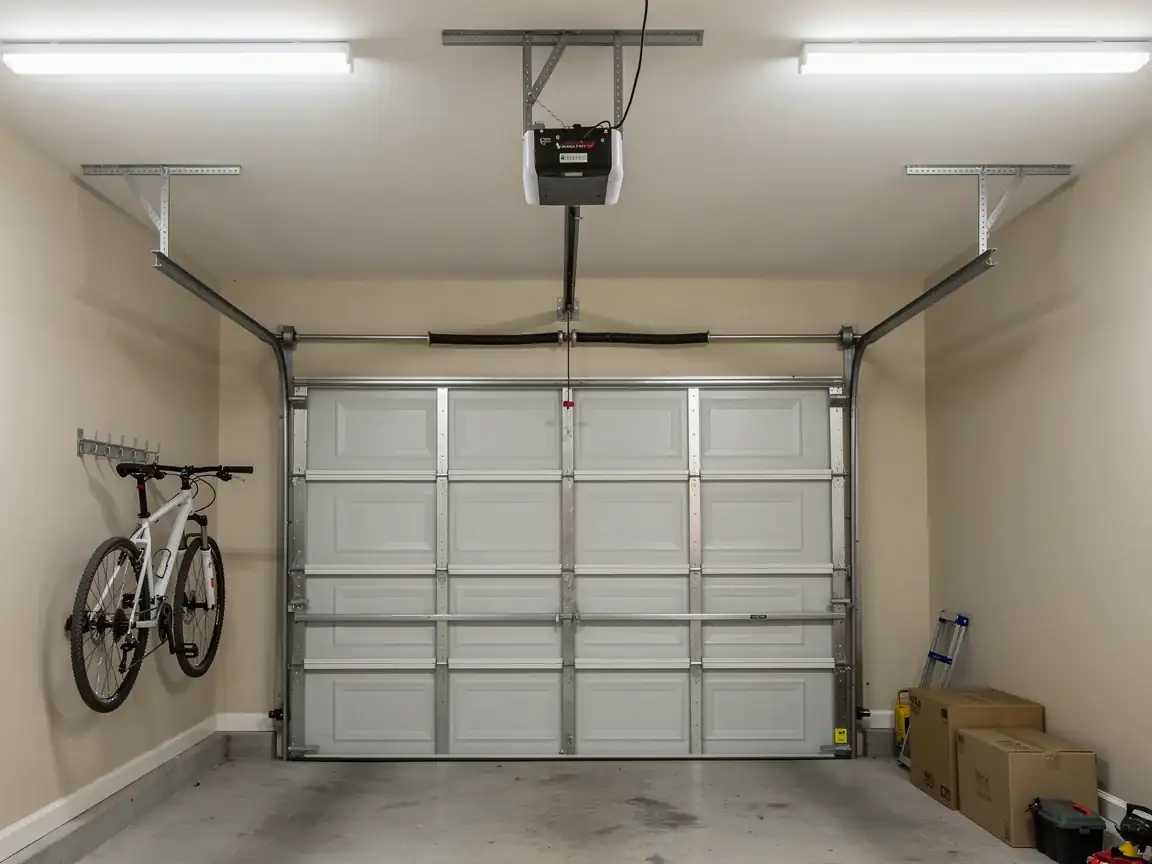
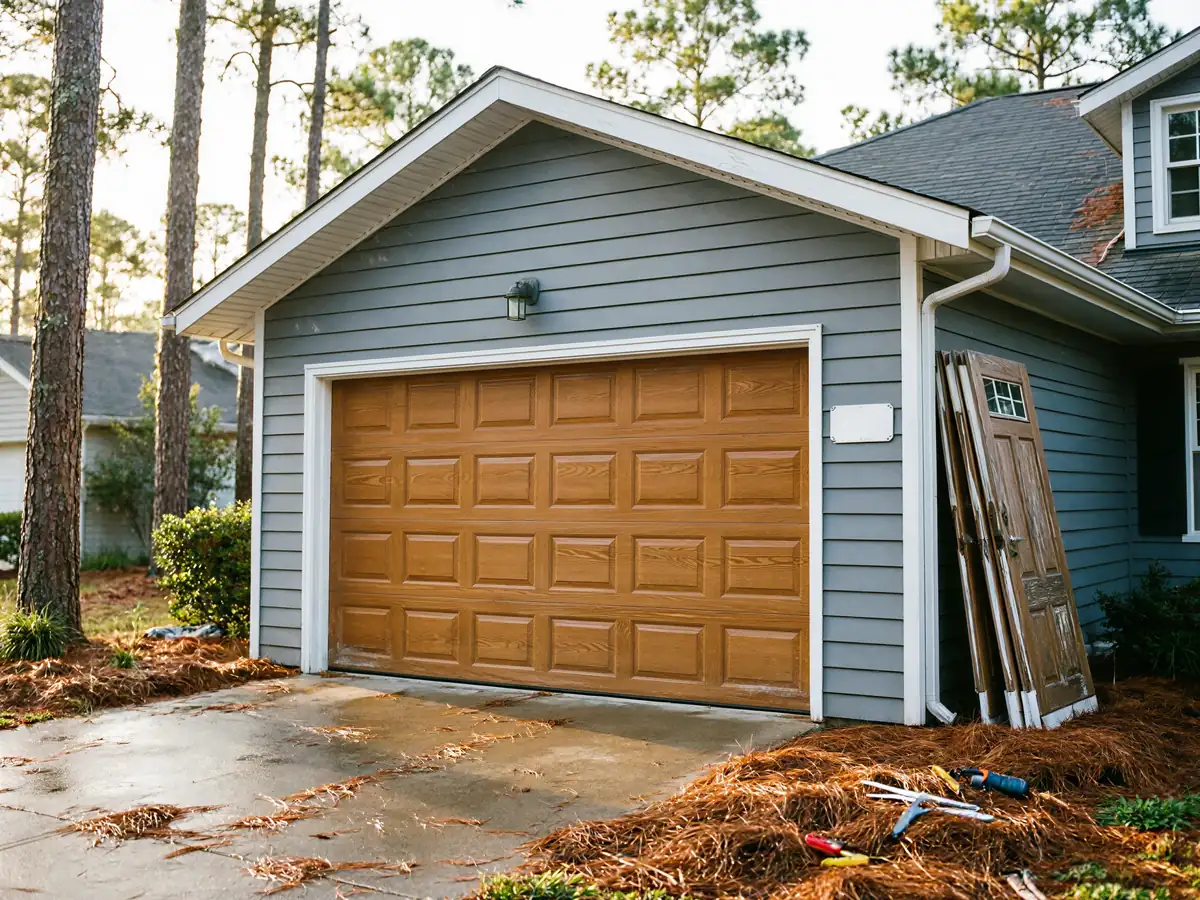
Garage door repair for Mooresville homes built mostly in the 1980s and 90s, where cold-moderate winters and original hardware wear springs and openers out the same way.
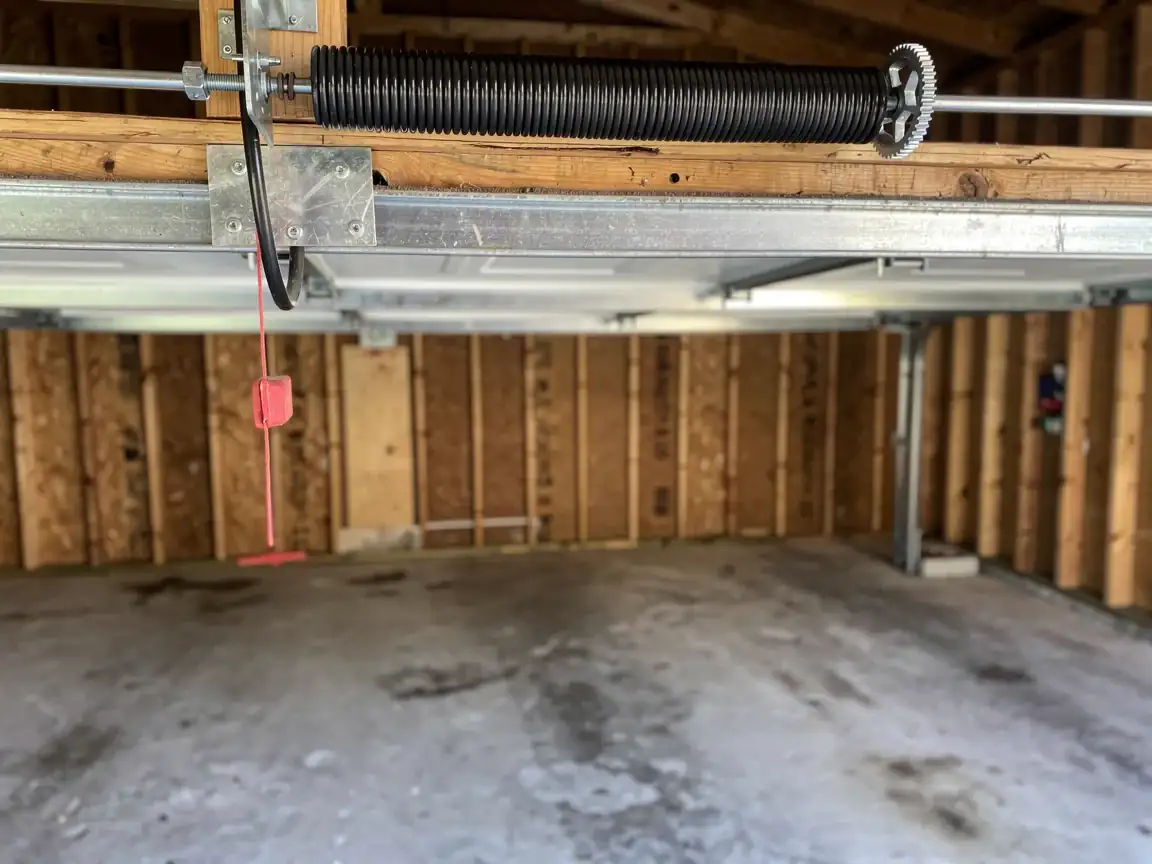
Most of the trouble we see traces back to two things: how old the house is and what the winter does to the hardware. A big share of Mooresville's housing went up between 1959 and 2005, with the heaviest building in the 1980s and 90s, spread across eleven named areas in the service footprint. That means a lot of torsion springs, extension cables, and openers that are original to the house, or close to it. Springs lose tension gradually, so a door that worked fine in October starts dragging by January. Cables fray at the drum where they wind and unwind thousands of times a year. Openers from that era run on gear sets and circuit boards that weren't built for 25+ years of daily cycles. None of this is dramatic until the day the spring snaps or the opener just stops responding. The failure isn't random - it's the age of the stock catching up with the cold-moderate climate load this area gets every winter. A door on a 1990s build with the stock torsion spring is doing more cycles per cold spell than a newer install with updated hardware, and it shows.
How It Shows Up
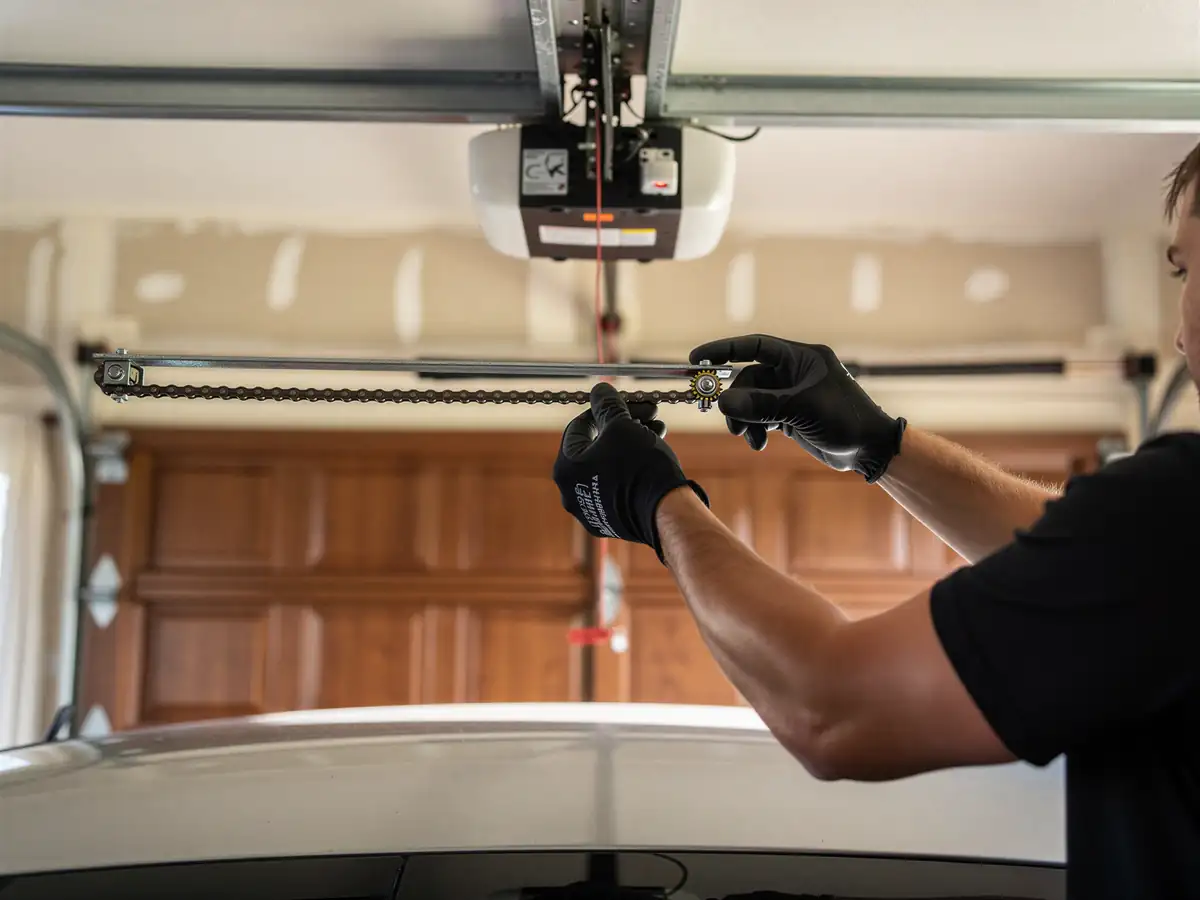
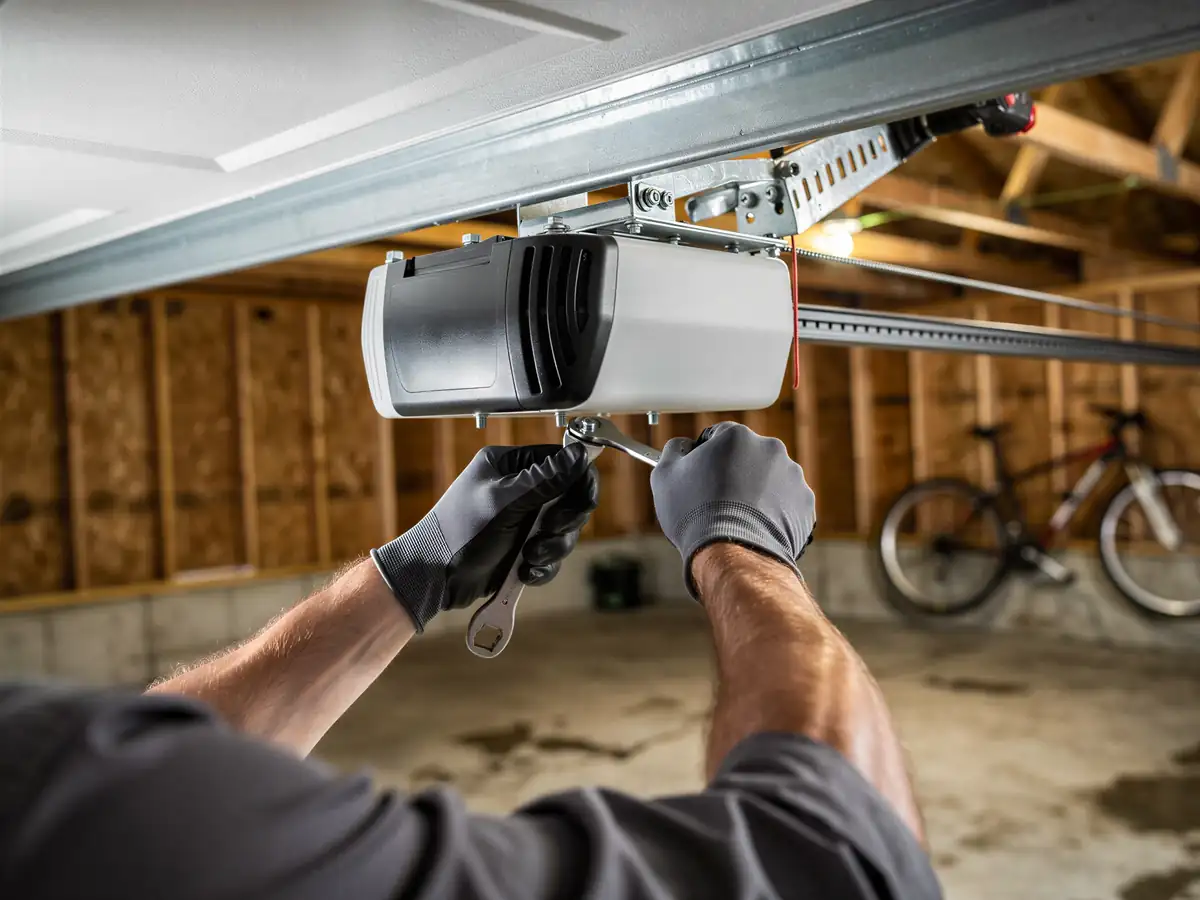
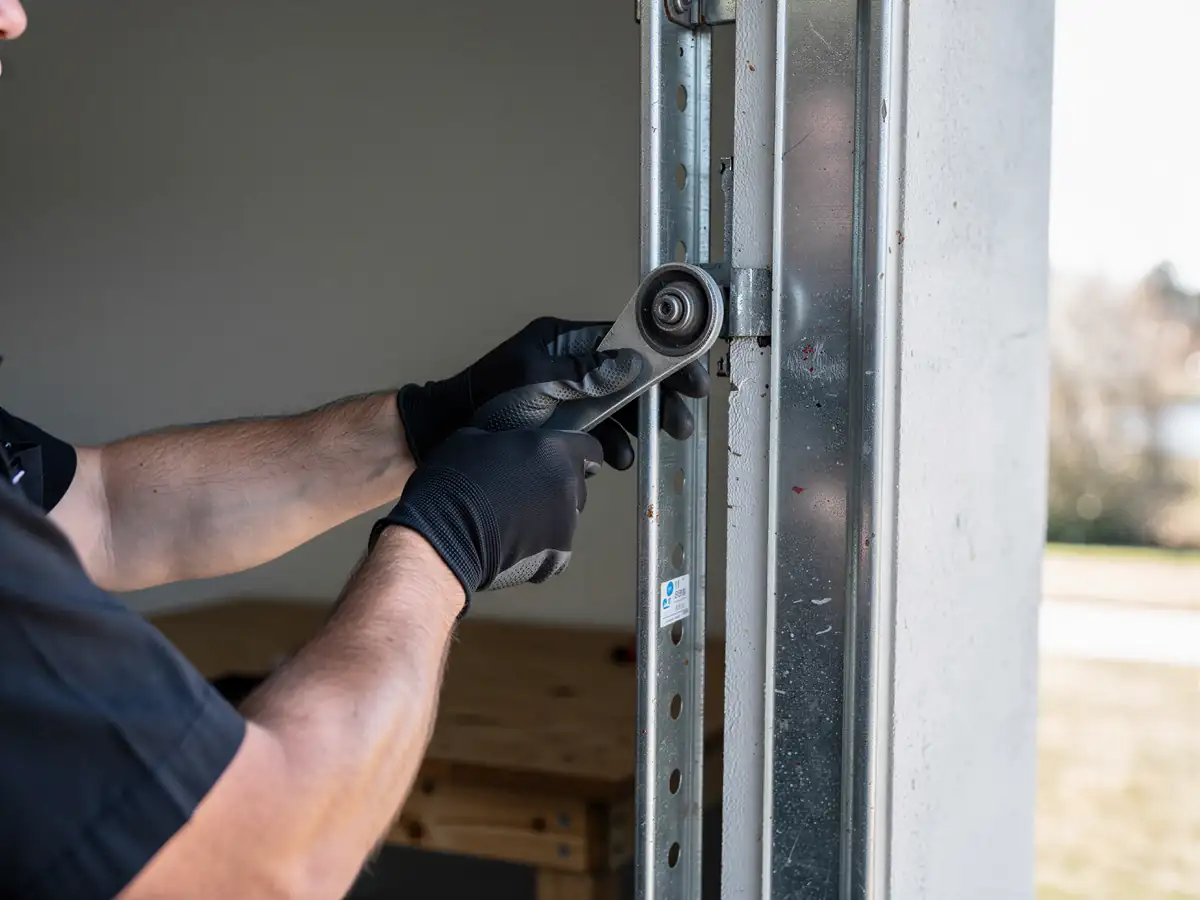
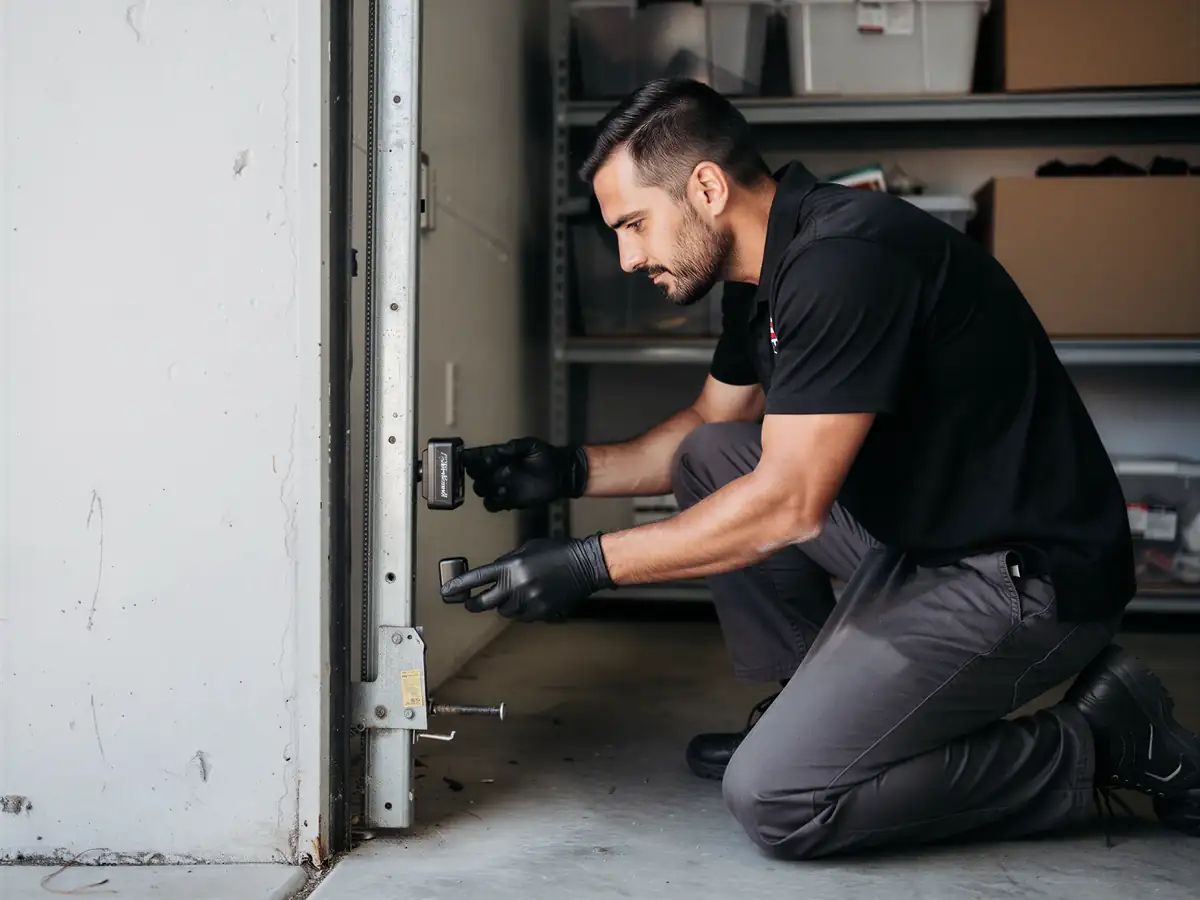
The first sign is usually noise - a grinding or popping from the spring side as it loses even tension, or a slow sag where one side of the door sits lower than the other. Openers start skipping the limit switch, reversing right before they close, or needing two or three remote presses to respond. Cables show up as a visible fray near the bottom bracket, sometimes a single strand poking out before the whole cable goes. On the older end of the 1959-2005 range, we also see rollers that have worn their track grooves oval instead of round, which makes the whole door shudder on the way up. None of these show up overnight - they build for weeks, which is why most calls come in after a sudden snap rather than a slow complaint.
Why This Fails Locally
This isn't a generalized garage door problem - it's specific to what's actually installed around here. With 32,664 households in the service area and 17,817 of those owner-occupied houses, a large number of garages are still running the spring and opener that came with the build, not a replacement. Combine that with a cold-moderate climate band: steel contracts in winter cold, torsion springs lose a measurable amount of tension as the metal tightens, and lubricant in older bearings thickens up on cold mornings. A spring sized correctly for a 1990s double door starts working harder than it was rated for once it's two decades old and going through freeze-thaw cycles every winter. At a median household income of $73,393, most owners we talk to want the specific part fixed - spring, cable, or opener board - rather than a full teardown, and for a lot of these houses that's the right call, since the door panels themselves often outlast the hardware that runs them.
Doing It Yourself
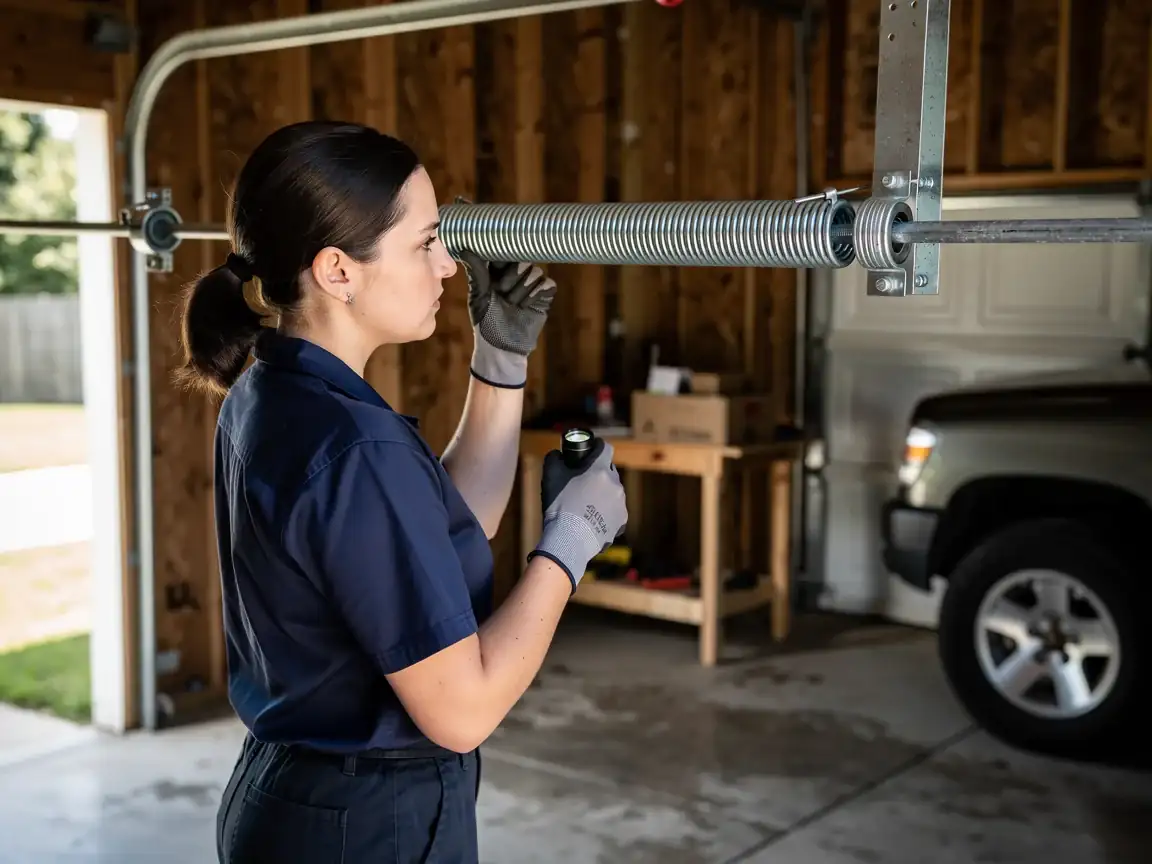
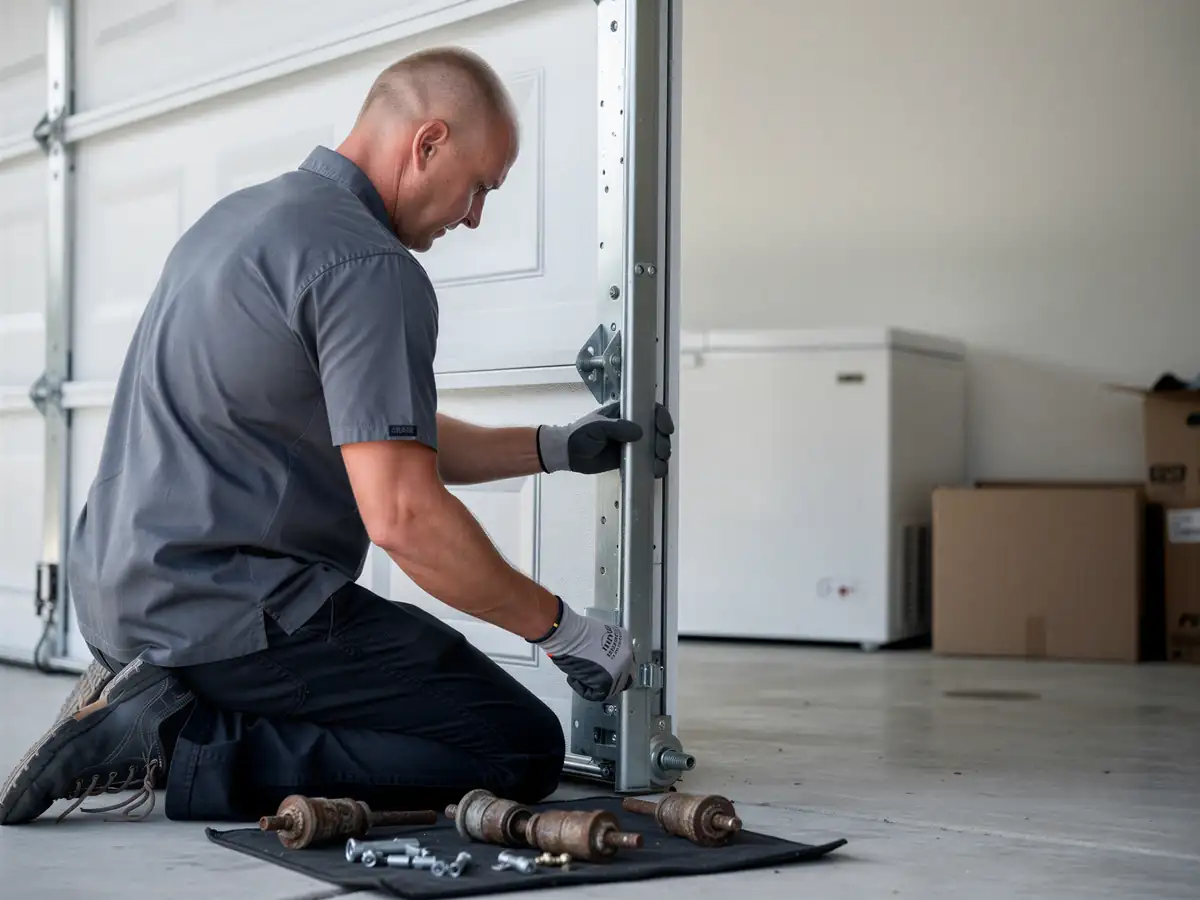
Some of this is reasonable to handle yourself. Tightening loose hinge bolts, cleaning and lubricating rollers, and replacing weatherstripping are all fair weekend jobs with basic tools. What isn't: touching a torsion spring. It's under enough tension to cause a serious injury if it lets go while you're winding or unwinding it, and that's true whether the door is five years old or twenty-five. If your opener is skipping the limit switch or reversing on its own, that's also worth a second look before you start swapping parts - sometimes it's a sensor alignment issue, not the motor. One honest limitation: if your spring size or opener model is old enough that the part isn't made anymore, which happens with some of the 1959-era houses in this area, repair isn't always possible and replacement is the only real option. We'd rather tell you that up front than sell you a patch that won't hold.
How it works
From “it’s stuck” to “it’s fixed”
01
Tell us what’s wrong
Describe the symptom - won’t open, loud bang, opener runs but the door won’t move.
02
On-site diagnosis
A technician tests the door under power and by hand and finds what actually failed.
03
Clear, up-front plan
You get the fix that’s needed and what drives the cost - before any work starts.
04
Repaired & tested
The repair is done, the door is set true and tested, and the work area left clean.
Not sure which repair your door needs in Mooresville, NC? Describe what it’s doing - every job starts with a diagnosis.
Why did my garage door spring snap in the winter and not before?
Torsion springs lose tension as steel contracts in cold weather, and Mooresville's cold-moderate climate band means that happens every winter cycle. A spring that was already near the end of its life from years of use often fails in the first hard cold spell rather than gradually.
Is my opener too old to repair if the house was built in the 1980s or 90s?
Not always - a lot of openers from that era can still be serviced if the motor and gears are intact. But if the circuit board or a specific part is no longer made, repair isn't possible and replacement becomes the practical option.
Can I replace a torsion spring myself?
We don't recommend it. A wound torsion spring holds enough force to cause a serious injury if it releases while you're working on it, regardless of the door's age or size. This is one job worth leaving to someone with the right bars and clamps.
Why do rollers wear out faster on older Mooresville houses?
Houses built earlier in the 1959-2005 range often still have their original steel rollers, which wear the track grooves oval over decades of use. That oval wear makes the door shudder or stick, and it gets worse, not better, with age.
Ready to get your garage door sorted?
Tell us what it’s doing and where you are in Mooresville - we’ll take it from there.