What Can Go Wrong
A door comes off track in a handful of specific ways, and they're not interchangeable repairs
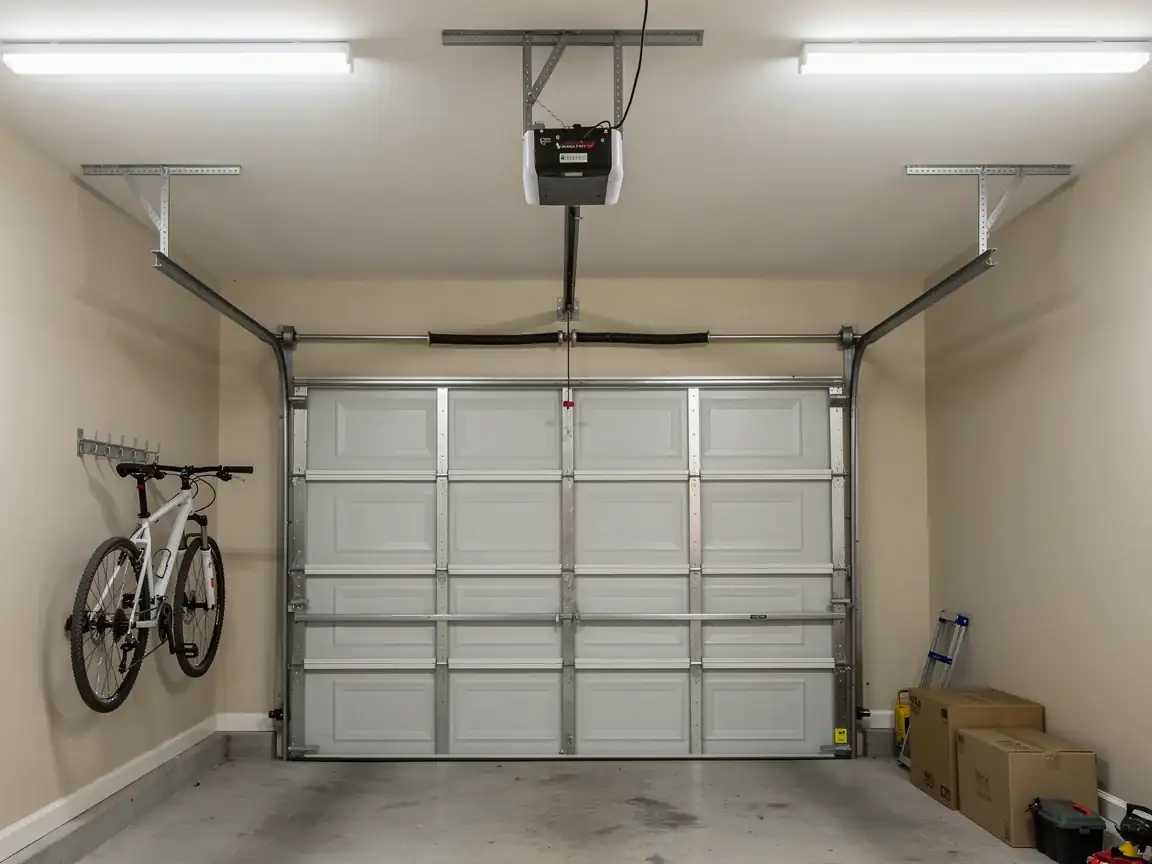
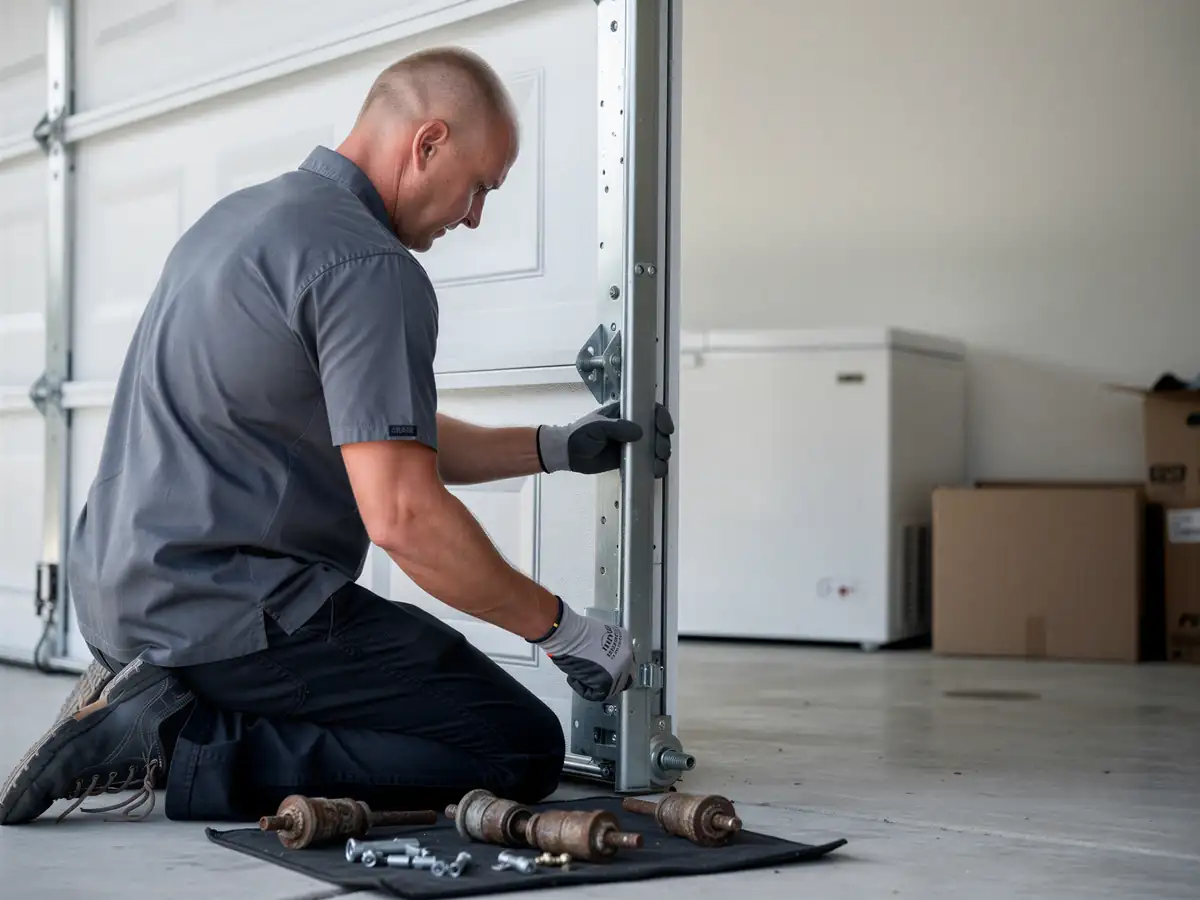
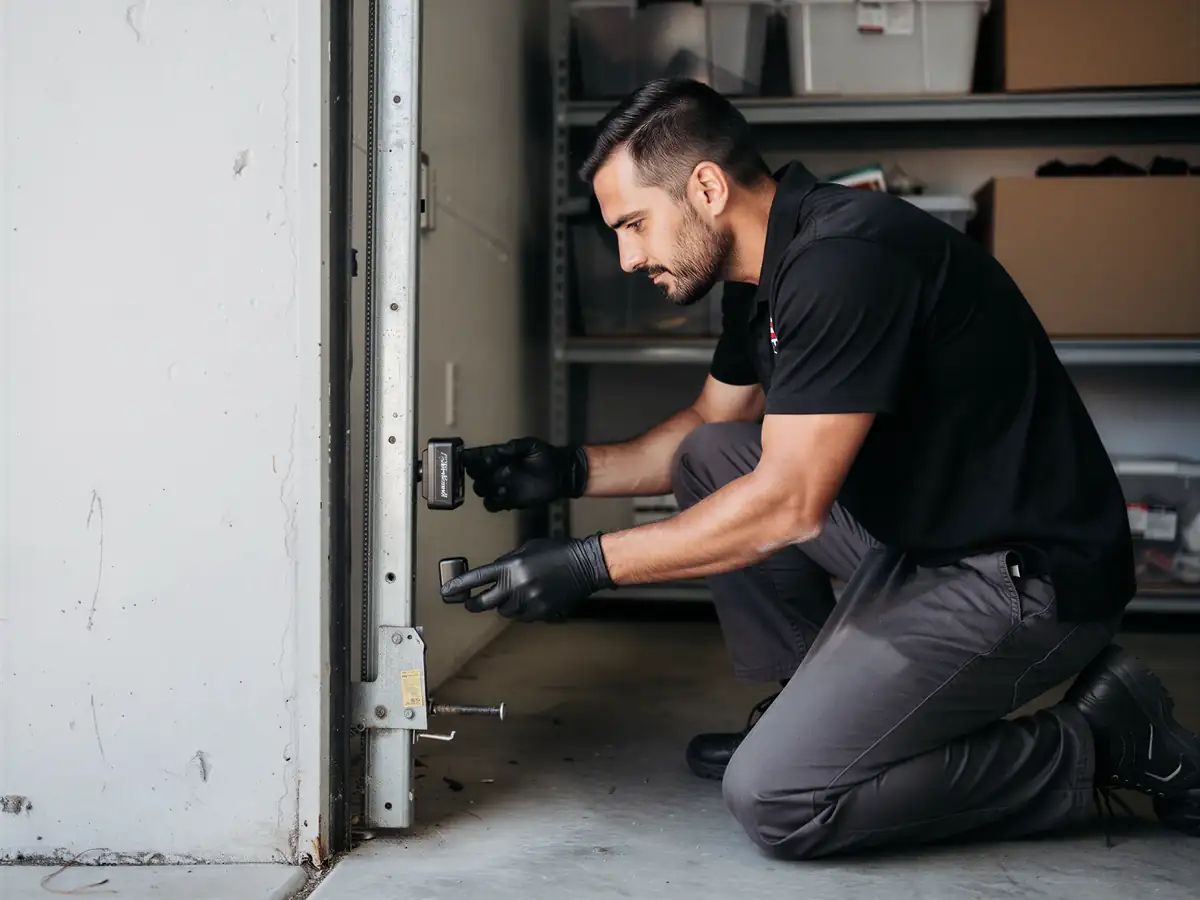
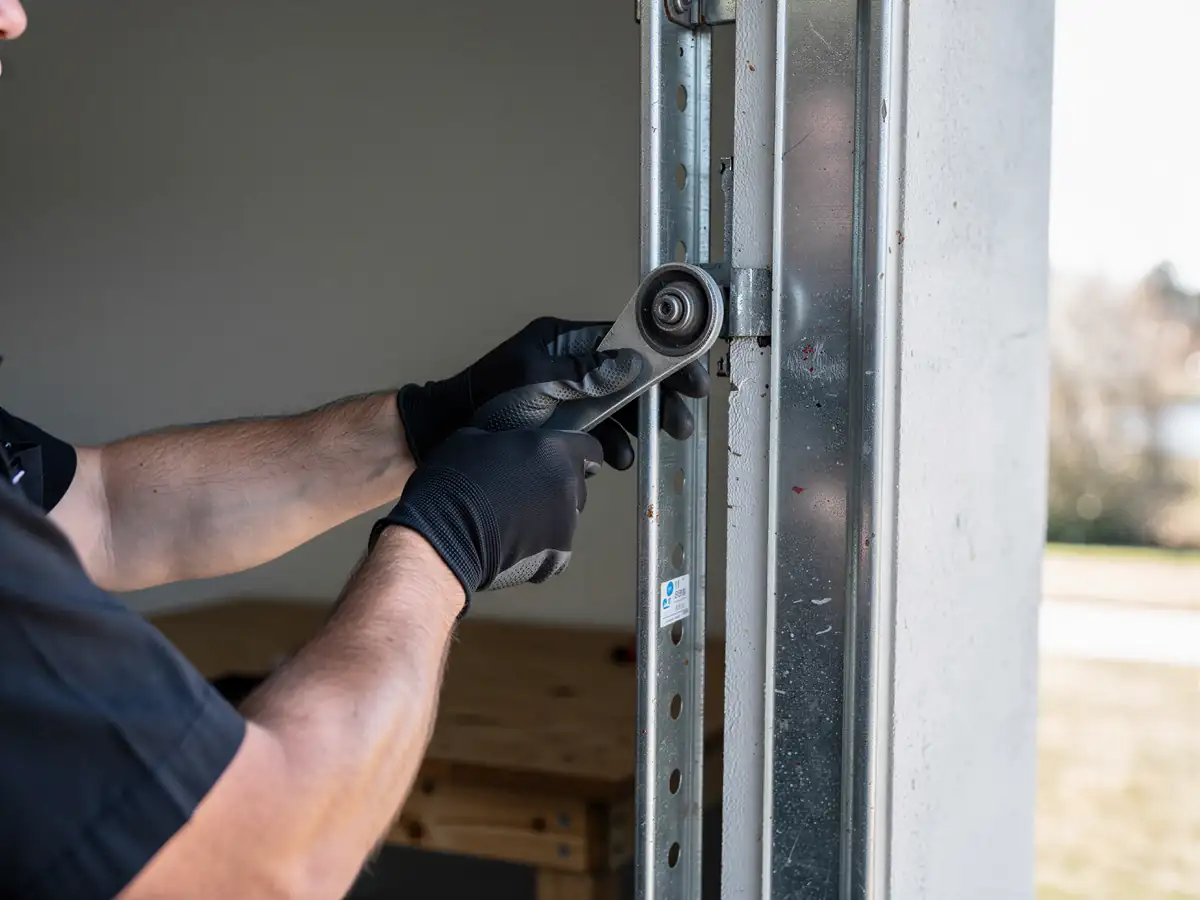
The track itself can bend from an impact - a bumper tap, a bike leaned against it, a kid backing out too fast. A roller can crack or seize in its stem and stop tracking the curve, so the panel climbs the rail instead of following it. A lift cable can jump its drum at the bottom bracket, leaving one side of the door hanging crooked while the other stays put. And the horizontal track can simply pull loose from the wall or header where it's lag-bolted, which looks like a track problem but is really a mounting problem.
Each of these needs a different fix
A bent section of track gets straightened or replaced outright - steel that's kinked rarely goes back true. A cracked roller gets swapped, cheap and fast if the door's otherwise sound. A jumped cable means the door is still under spring tension and isn't something to wrestle back into place by hand. A loose bracket means re-anchoring into solid framing, which sometimes means finding wood that hasn't already chewed out around the old bolt holes. The failure that looks the same from the driveway - door crooked, won't close right - can trace back to any of these, and guessing wrong wastes a trip.
How It Shows Up
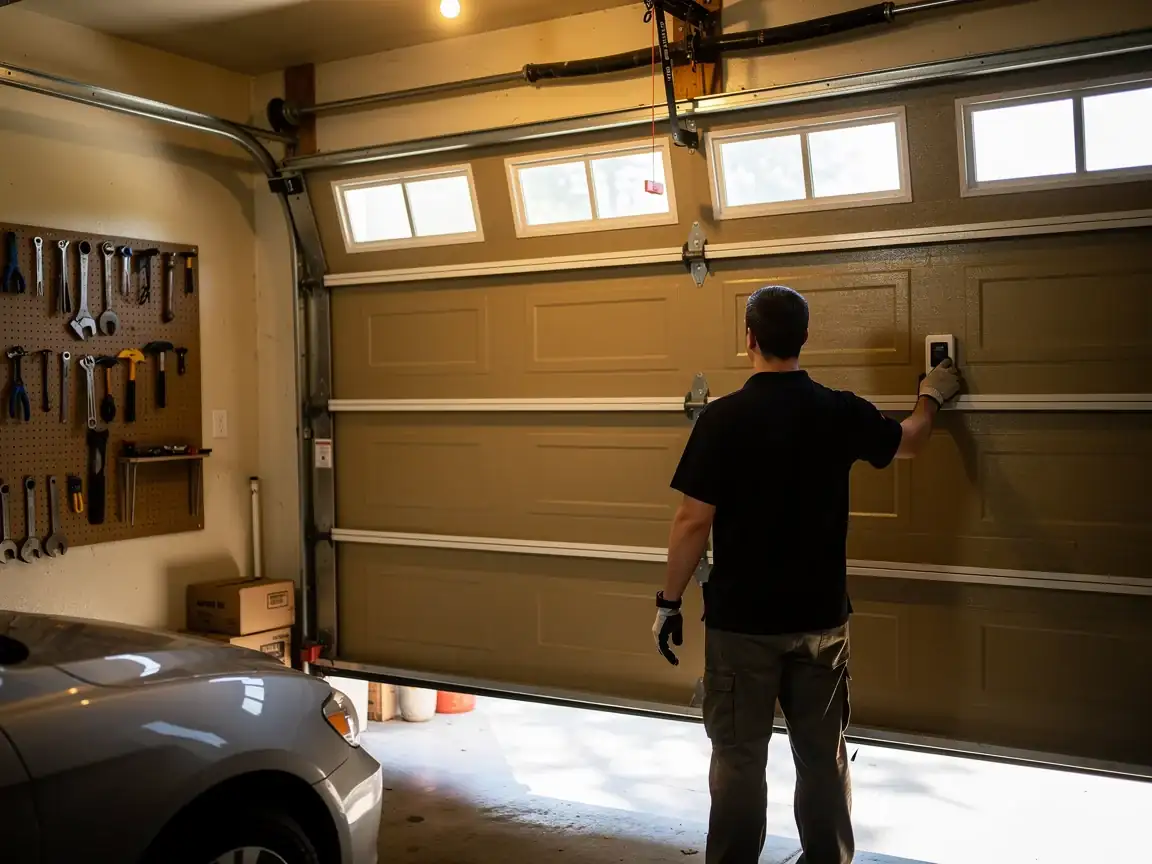
Most people notice it before they understand it. The door hangs unevenly, with a visible gap between one bottom corner and the floor while the other corner sits tight. Opening or closing gets loud - a bang, a grind, or a rhythmic thump as a roller catches wrong on every rotation. Sometimes the opener runs but the door barely moves, straining against resistance it shouldn't have. Other times a panel visibly twists, racking slightly out of square as it travels, which is the track telling you it's no longer holding the door on the path it was built for.
A less obvious sign is a door that reverses on its own partway through closing - the opener's safety sensors read the binding as an obstruction and stop the cycle, which isn't a sensor problem at all. If you see daylight between the roller and the track, or the track pulling away from the wall bracket when the door cycles, stop running the opener. Forcing a door through a cycle when it's binding on a bent or detached track usually turns a track repair into a track-and-panel repair, and sometimes a spring repair on top of that if something lets go under load.
Why This Fails Locally
Housing across this service area mostly went up between 1959 and 2005, with the bulk of it - across all eleven towns and areas we cover - built during the 1980s and 90s boom. That matters because track hardware from that era was lag-bolted into jamb framing that's now 25 to 40 years old, and wood shrinks and settles over decades. The bolts loosen, the bracket flexes a little more each cycle, and eventually the track walks away from the wall under normal use, no impact required.
The climate band here is cold-moderate, which doesn't sound dramatic, but it means real freeze-thaw swings through the winter months. Grease inside a roller bearing stiffens on a cold morning, steel track contracts slightly, and a roller that's been marginal for a year finally cracks on the one morning it's below freezing. Davidson sits seven miles from here, Troutman nine, Salisbury twenty - and the same build-year hardware shows up across that whole stretch, which is why this is a service-area-wide pattern and not a quirk of one neighborhood. With roughly 17,817 owner-occupied houses in the service area, most still running original or close-to-original track from the build year, bracket fatigue and cold-stiffened rollers are the common failure, not the exception.
Doing It Yourself
There's a real limit to what's safe to do yourself here, and it's worth being honest about it
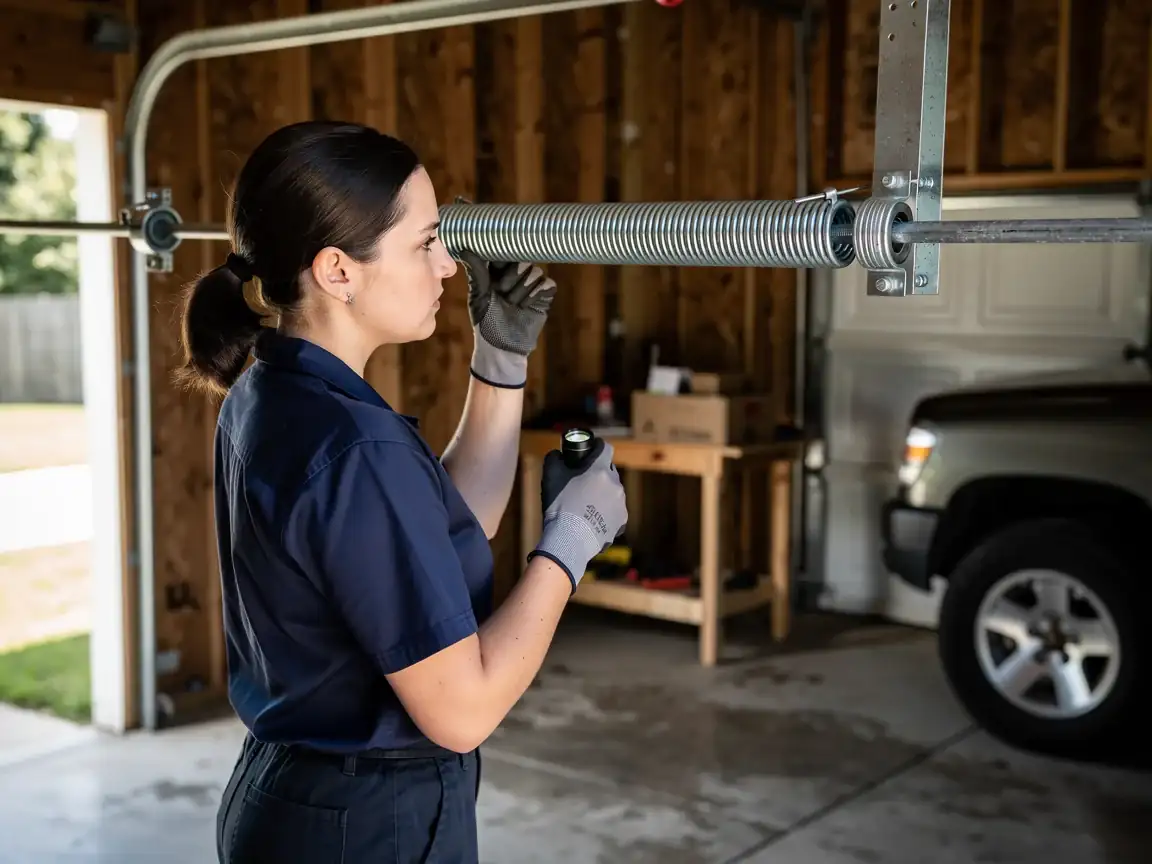
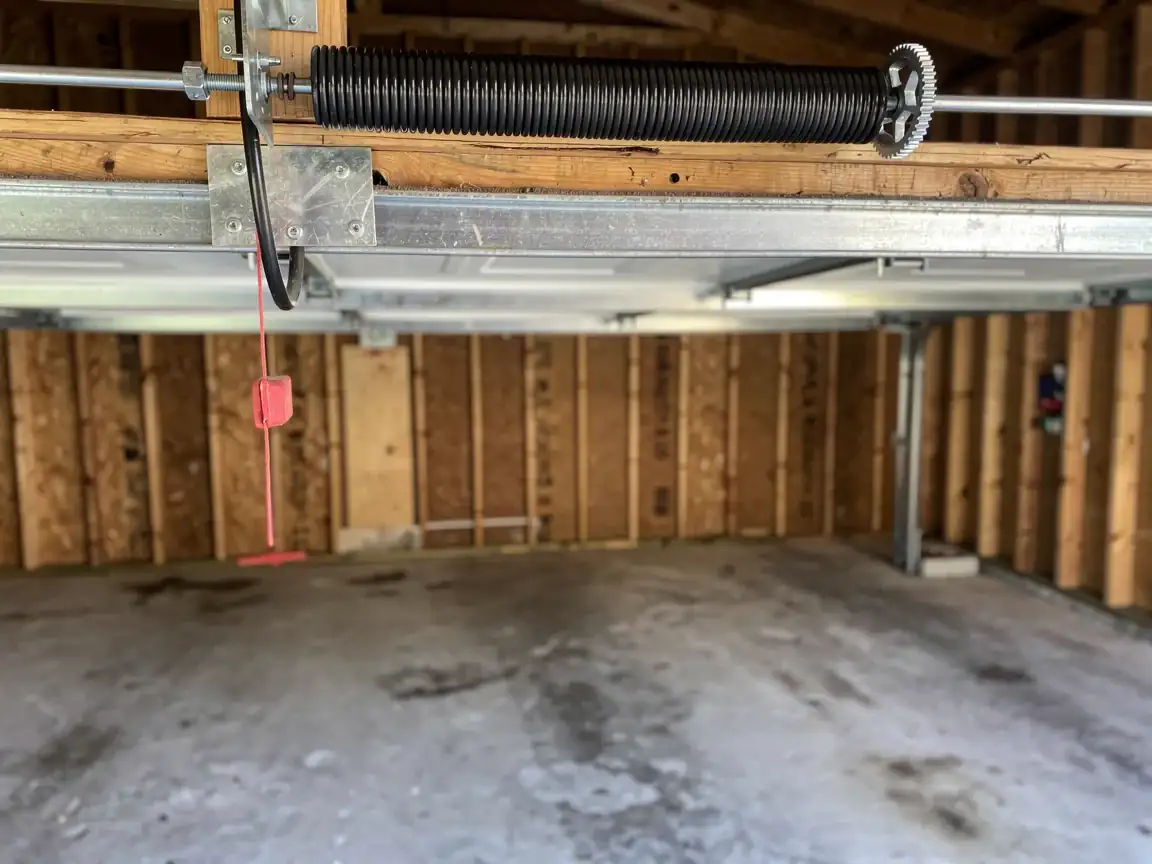
If the door is off track because a cable jumped the drum, the door is still connected to a loaded torsion spring, and trying to muscle the panel back into the track yourself risks a cable snap or a panel dropping on your hand. That one's a call, not a project.
What you can check safely
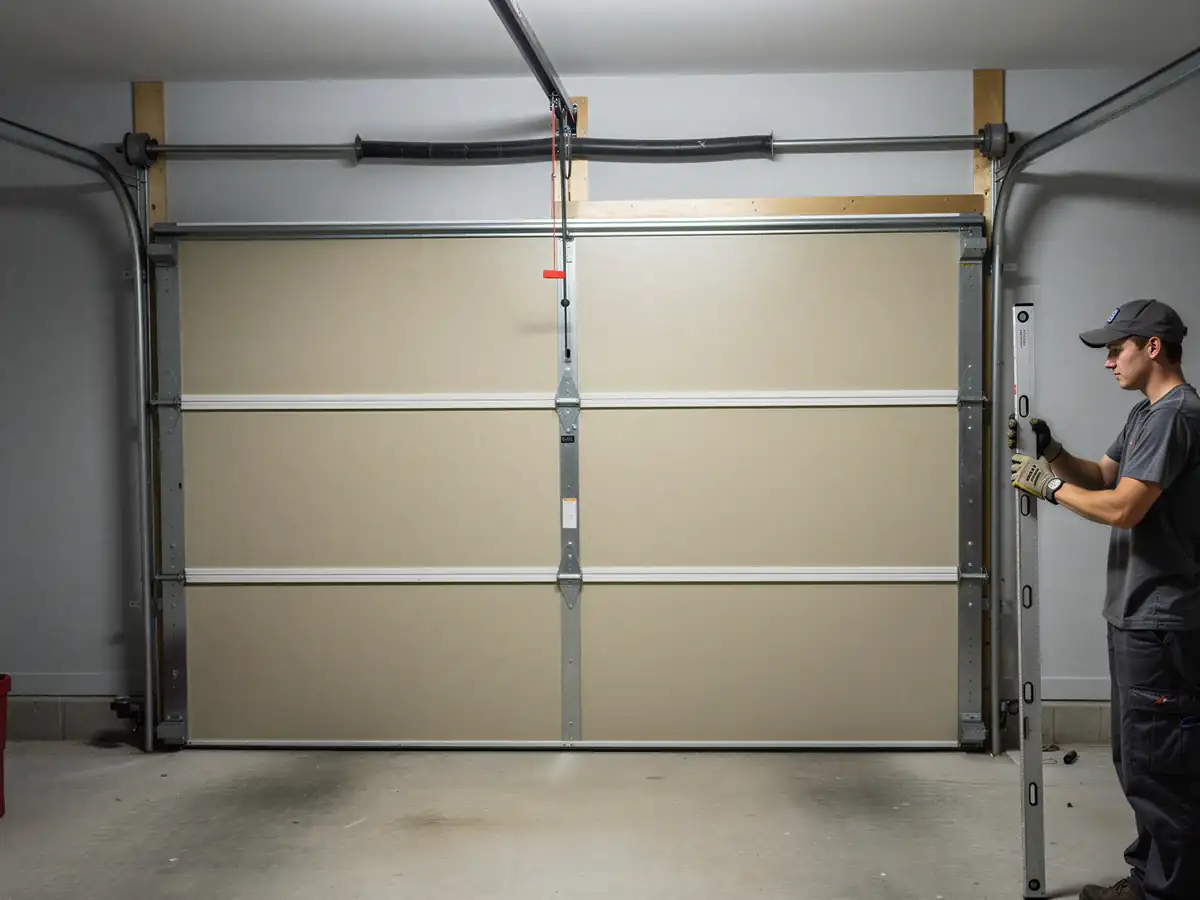
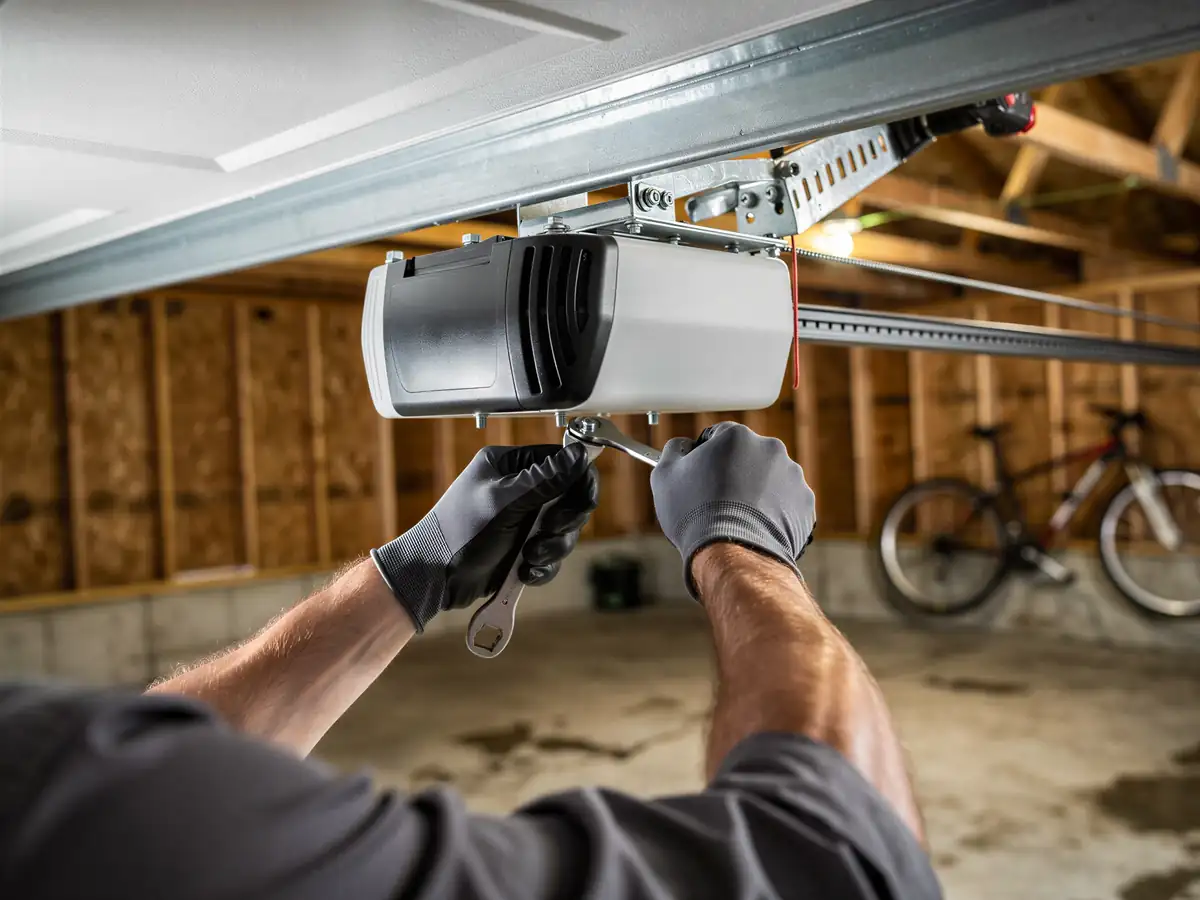
Look at the horizontal track brackets where they bolt into the framing and see if they've worked loose - a loosened lag bolt is sometimes just a re-tightening job if the wood underneath is still solid. Clear any debris, leaves, or ice buildup sitting in the track channel, since that alone can push a roller out of line. If a roller looks visibly cracked but the door is otherwise tracking fine, that's a single-part swap most people can manage with the door disconnected from the opener and manually supported.
What's not a DIY job
Bending track back into shape, re-threading a cable onto its drum, or forcing a racked panel square again. Those all put you near spring tension or a door that can shift weight unexpectedly, and a bent track that gets forced straight rarely holds its shape anyway - replacement is usually the honest answer there, not a repair.