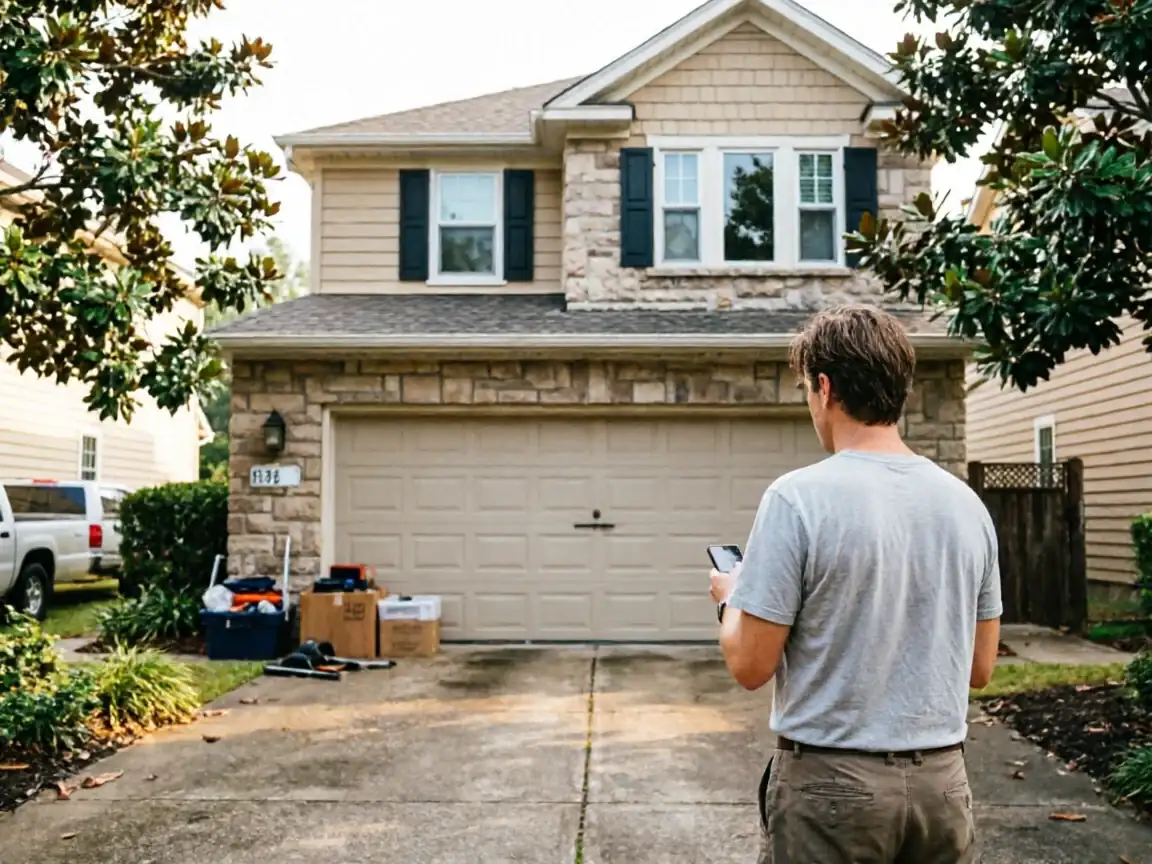
Doing It Yourself
Troutman's median home dates to about 2003
Which is newer than most of the wider Mooresville service area, where the build-out spans 1959 to 2005 with a median closer to 1996. That matters because a 2003 door isn't fighting forty-year-old steel or ungalvanized hardware - it's fighting dried-out factory lubricant and rollers that have logged two decades of cycles without anyone touching them.
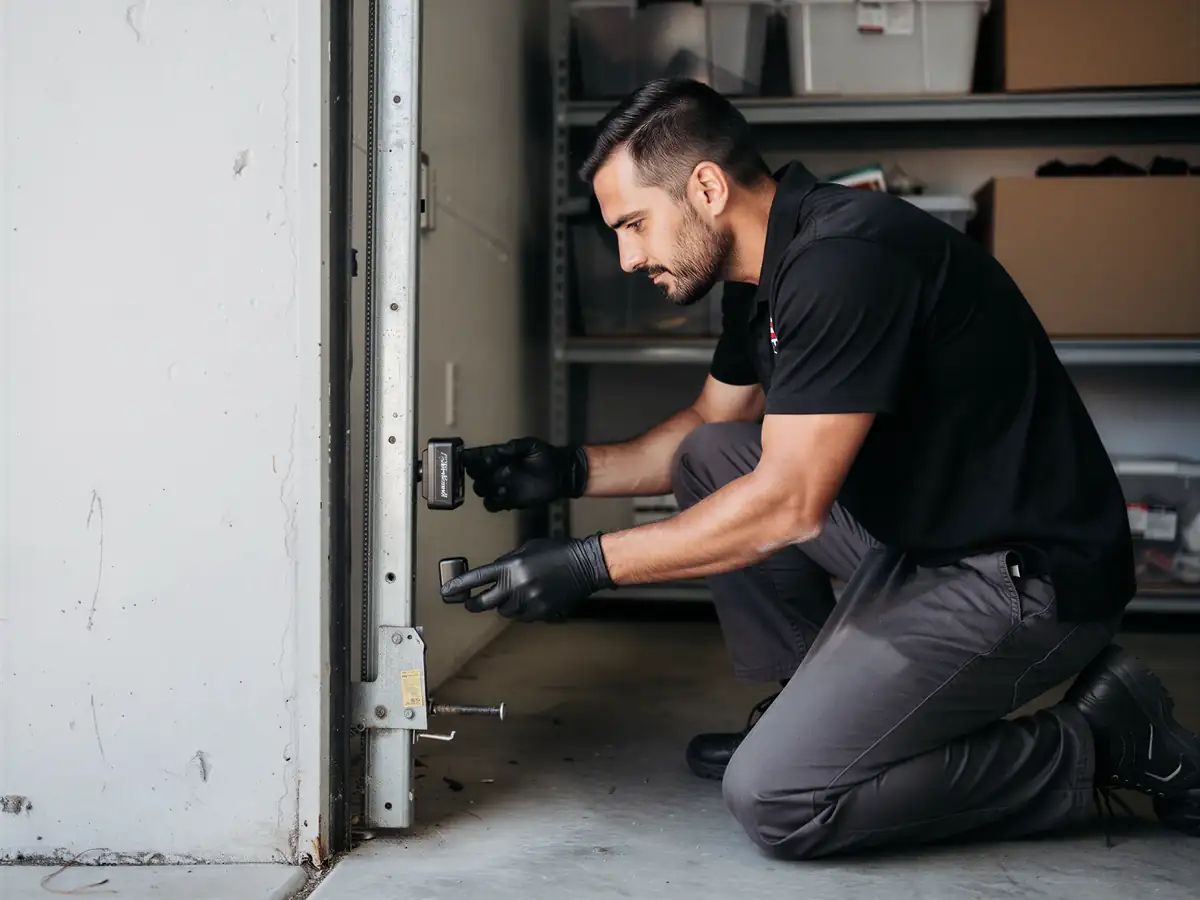
Once a year, wipe down the tracks and check for grease that's gone gummy or flaked off
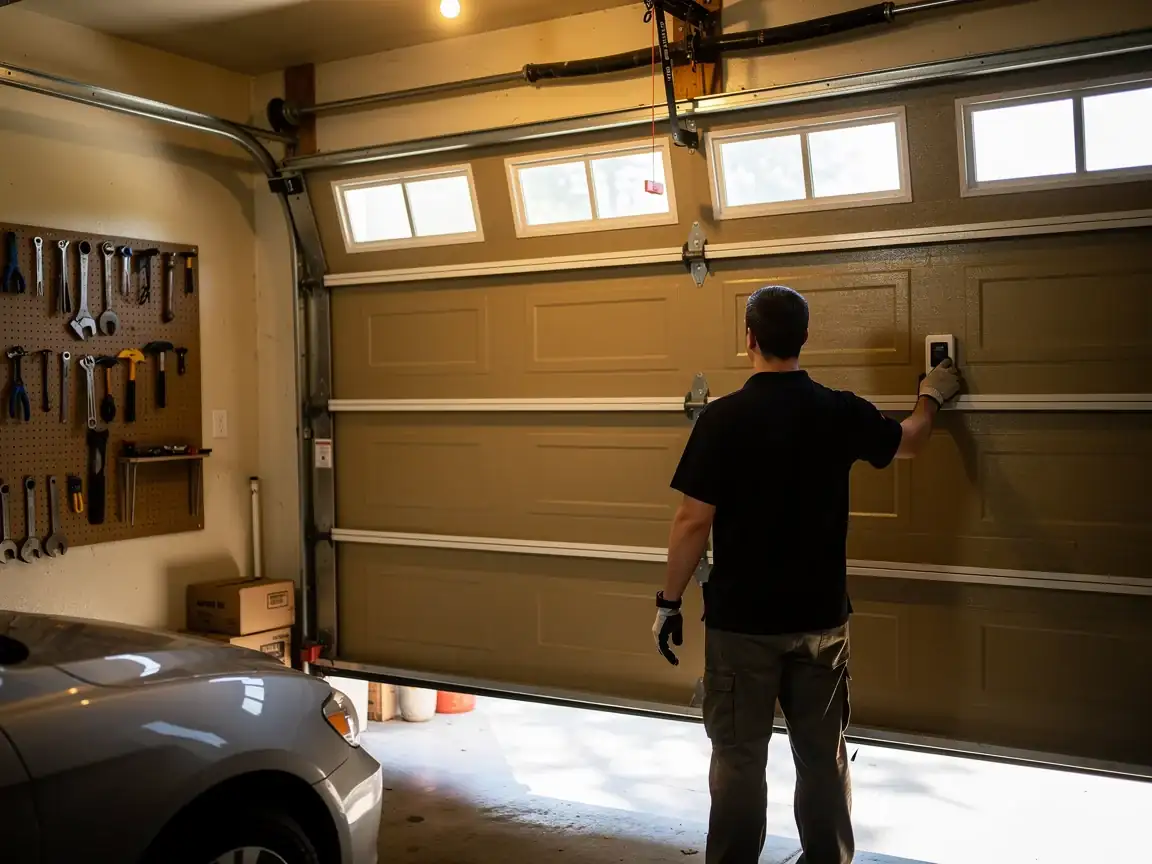
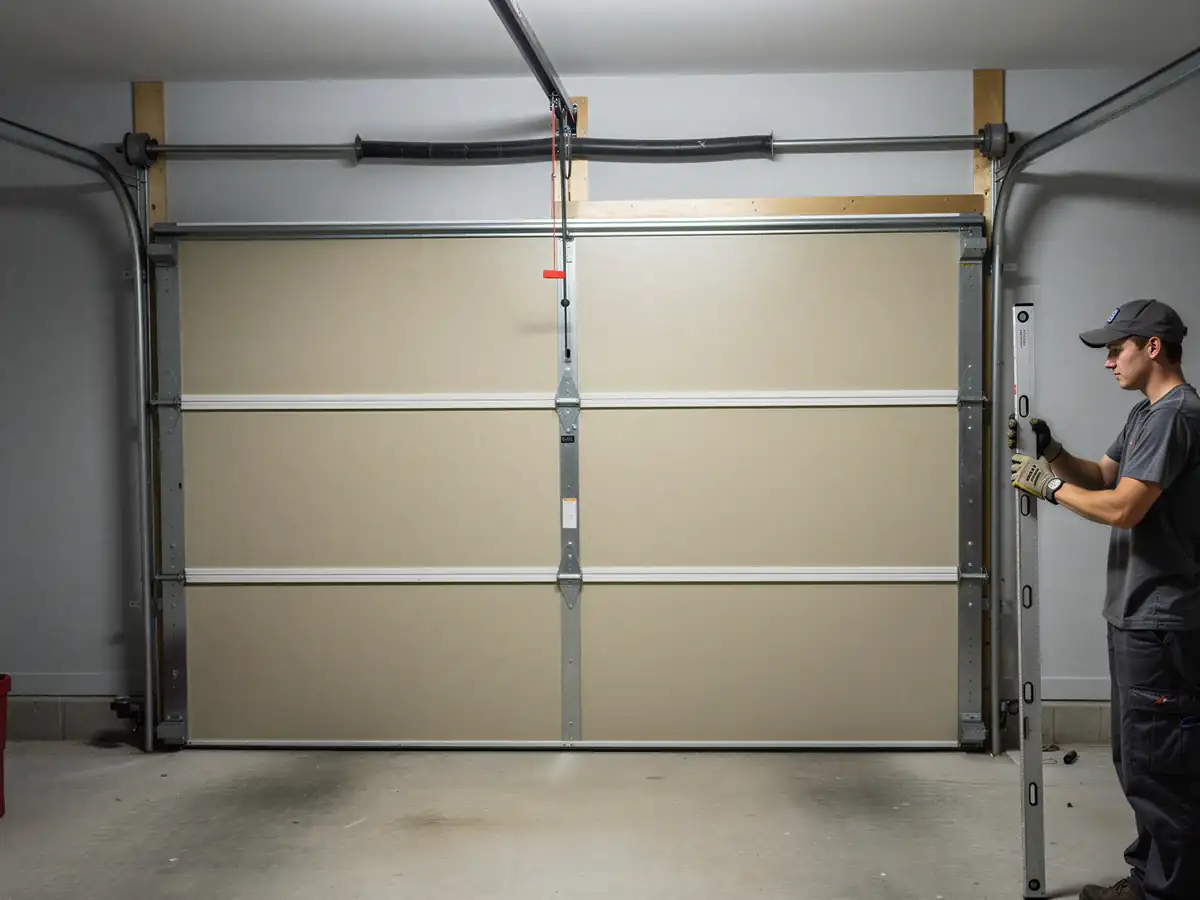
Factory lube on doors this age is usually long gone. Run a light household oil or white lithium grease on the rollers, hinges, and torsion spring coils, not on the track itself. Pull the release handle and test that the door moves smoothly by hand with the opener disengaged; resistance usually means a spring losing tension or a track going out of square. Check that the photo-eye sensors near the floor are clean and aimed at each other - these were standard safety equipment by the time Troutman's housing went in, and a misaligned pair is one of the most common no-close complaints we hear.
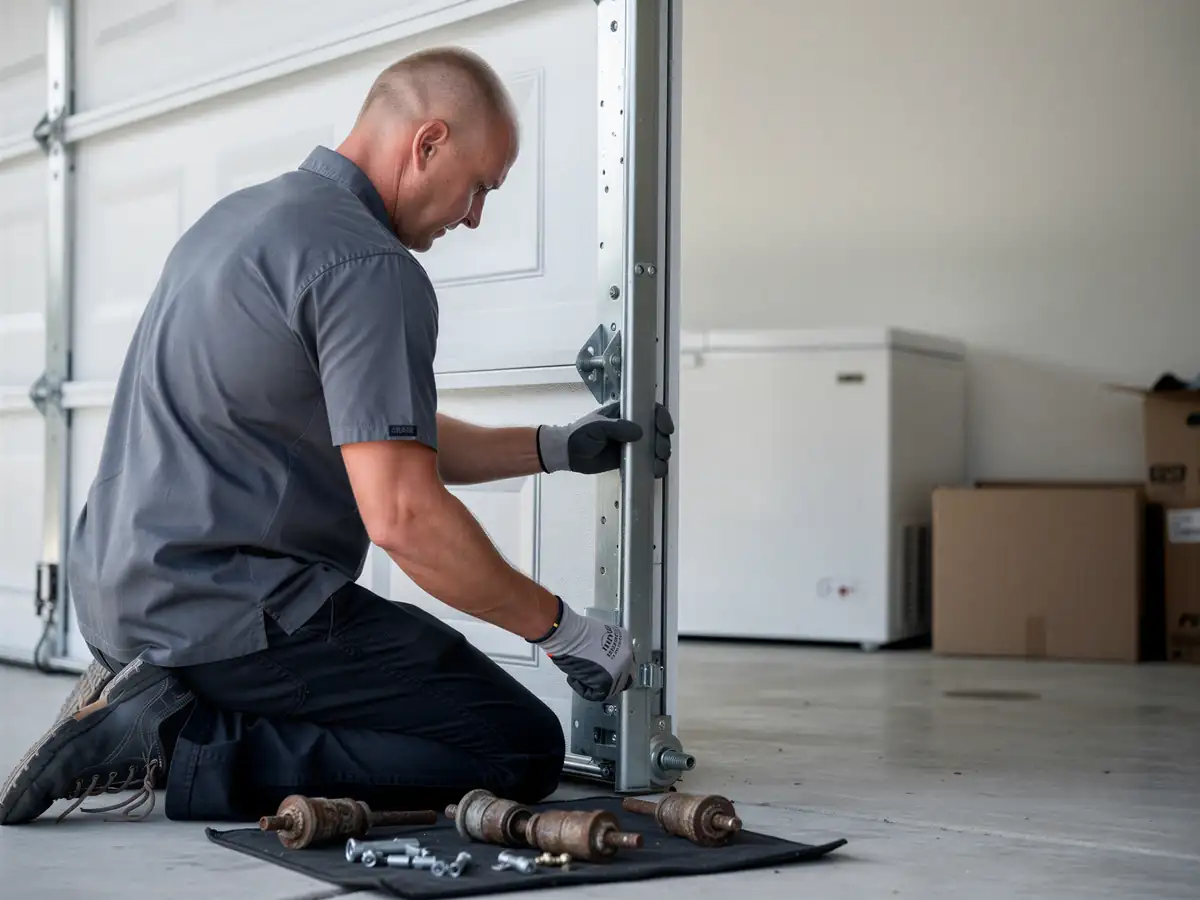
What you shouldn't do yourself: adjust spring tension
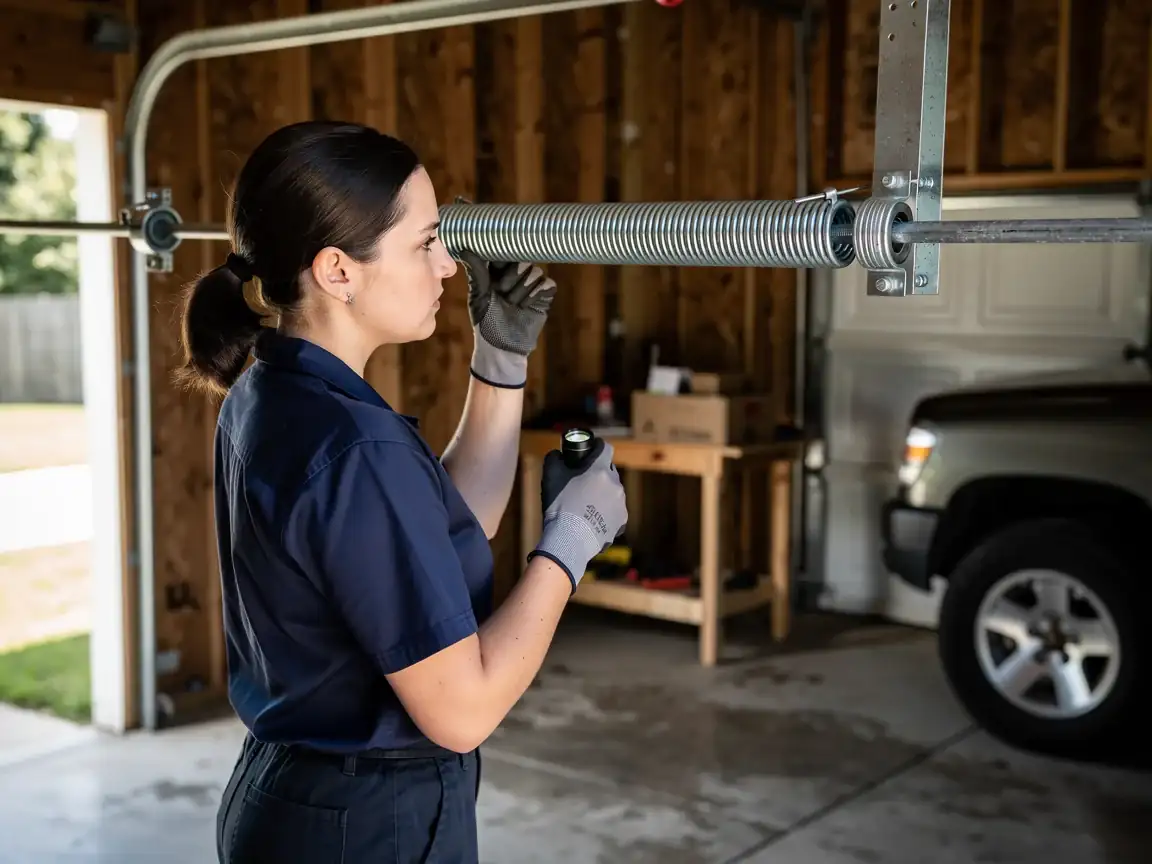
On a door this age the torsion spring is still doing its rated cycles, but when it does let go, it's under real load and it's not a DIY job.
What Can Go Wrong
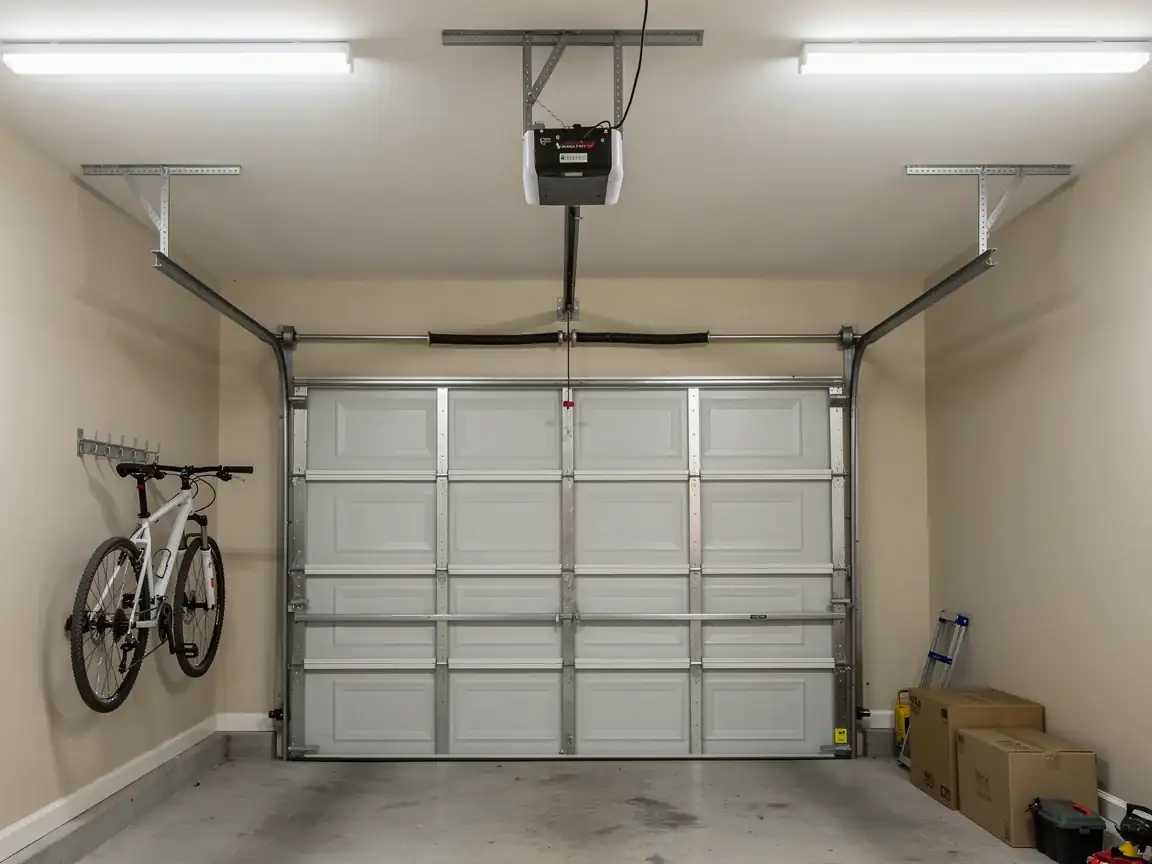
The housing stock going up in Troutman around 2003 standardized on steel sectional doors, torsion springs mounted over the opening, and openers with built-in reversing sensors - a big step up from the extension-spring, no-sensor setups common in older parts of the service area. That standardization means faults here tend to cluster in predictable spots rather than the wide variety you see in older neighborhoods.
The most common calls from this stretch of the service area: nylon rollers that have worn down to the point they're binding in the track, torsion springs nearing the end of a 10,000-cycle rating after close to twenty years of daily use, and opener logic boards or sensor wiring that corrode or loosen with age. Weatherstripping on the bottom panel also tends to crack around this age, letting in draft and moisture, which matters given the area's cold winters.
We don't see much rot or rust-through on doors from this build era the way we do on older stock - the materials were already galvanized steel by 2003. What we do see is wear accumulating quietly until a spring snaps or a roller jumps the track without warning.
Parts We Carry
Because the climate here runs cold with real seasonal swings, we stock lubricant rated for temperature extremes rather than generic shop grease - it matters when a torsion spring has to move in January the same way it did in July. On the truck for a typical Troutman call: galvanized torsion springs sized to door weight, nylon and steel rollers, lift cables, bottom-panel weatherstripping, and replacement photo-eye sensor pairs.
We also carry opener circuit boards and wall-control units for the common residential brands installed during this building period, since a sensor or logic fault is often cheaper to fix than to replace the whole unit. What we don't keep in stock are parts for older extension-spring systems or doors predating steel sectional construction - those are less common on this side of the service area, and if a specialty part is needed we order it rather than guess at a fit.
We travel to Troutman from our Mooresville base, about 9 miles out, so a maintenance visit is scheduled rather than same-hour, and we bring the parts list based on what you describe over the phone.
How It Shows Up
On a door from this era, trouble rarely starts with a dramatic failure - it starts as noise
A grinding sound usually means a roller has worn past its bearing and is scraping metal on metal. A door that reverses halfway up, or won't close at all, often traces back to the photo-eye sensors - either knocked out of alignment or fogged with condensation given the area's humidity swings between seasons.
If the door feels heavier than it used to when you lift it by hand with the opener disengaged, that's a spring losing tension, not an opener problem
With roughly two decades on the original torsion spring in many Troutman homes, that's an expected wear pattern, not a defect. A door that shudders or jumps at one specific point in its travel usually means a bent track section or a loose roller bracket at that exact spot.
None of these are emergencies in the sense of needing a same-day call
But none of them get better on their own either. A spring at the end of its cycle life doesn't recover; it just gets closer to breaking under load.