Booking a Visit
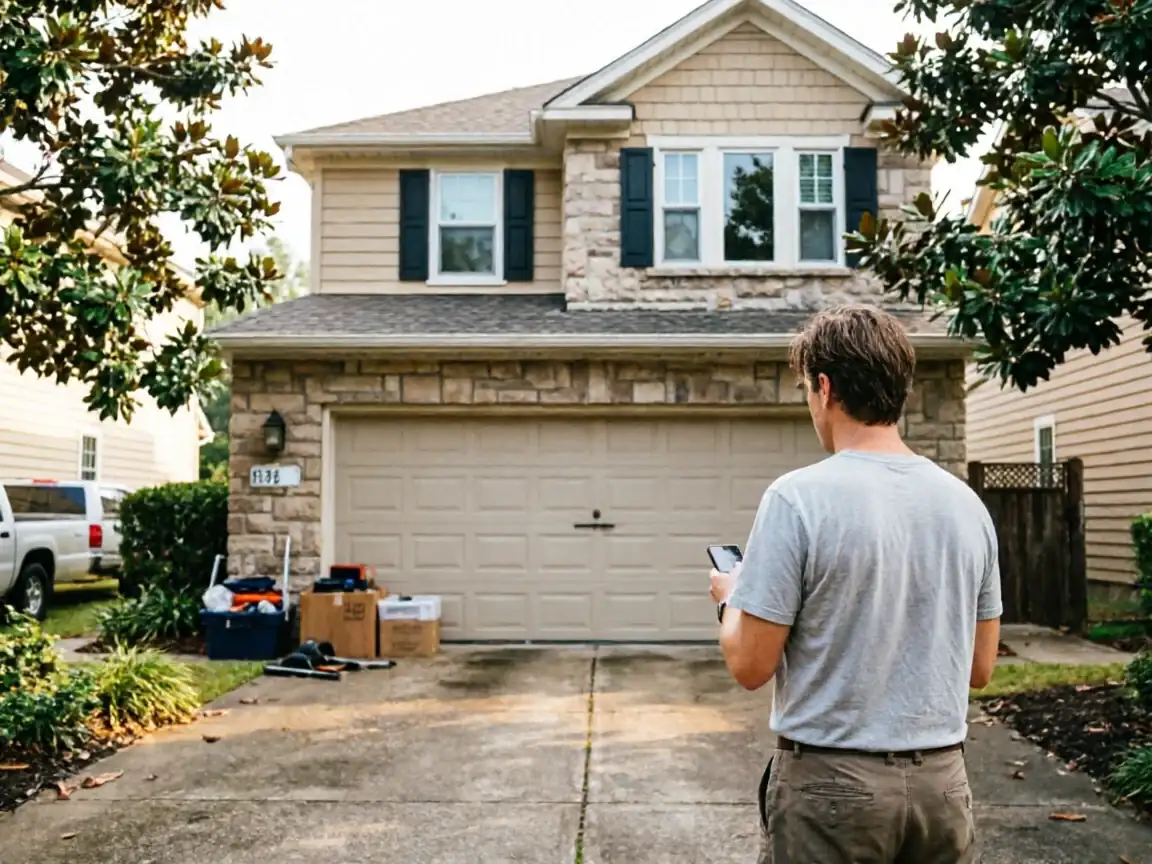
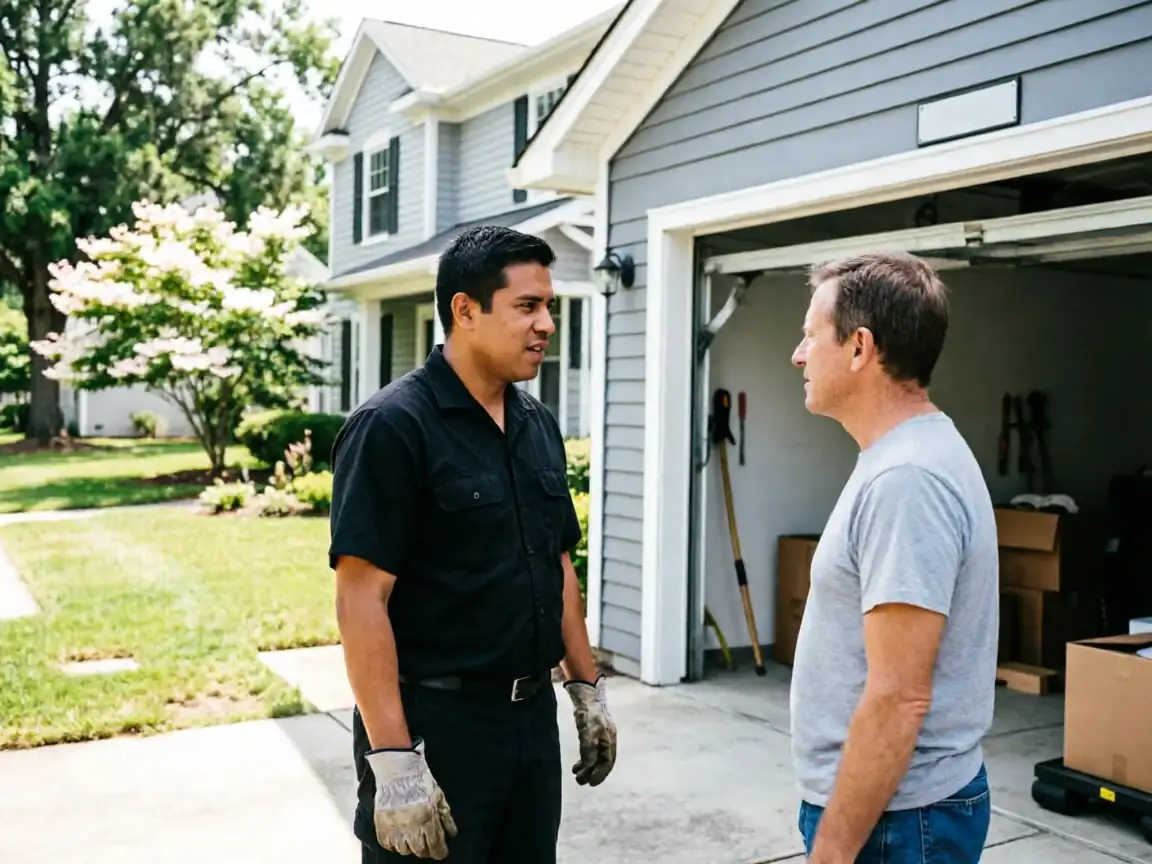
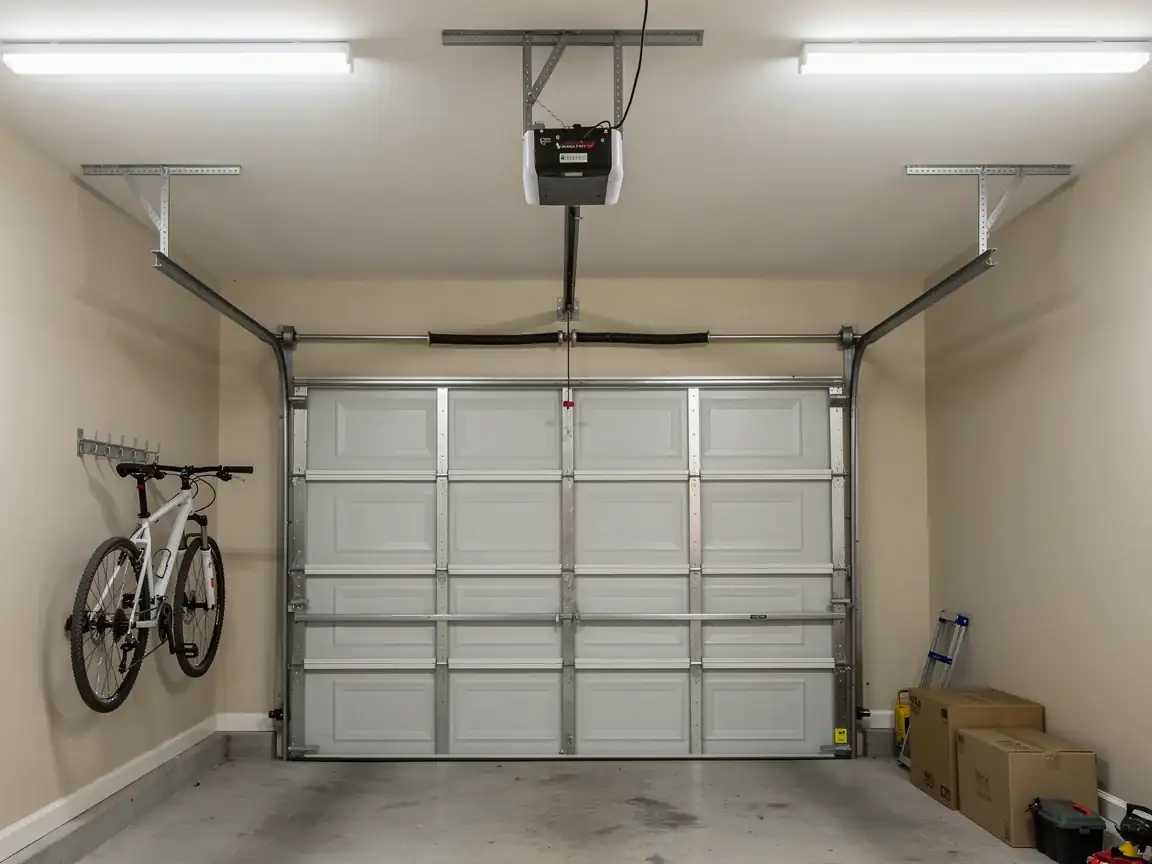
We run out of Mooresville, and Lake Norman of Catawba sits about nine miles from there - close enough that we fold it into regular routes rather than treat it as a special trip. That matters for scheduling: we're not promising a dedicated local crew or a same-hour window, but we're also not asking you to wait for a once-a-month swing through the area. Tell us the opener brand if you can read it off the housing, and whether the door still moves on manual release - that one detail changes whether we bring a board kit or a full motor on the first trip. With roughly 3,871 households in this stretch, most of the opener calls we get here trace back to the same handful of builder-grade models that went in during the original construction push, so we usually have a reasonable guess before we even pull in the driveway.
The Cost of This Job
We're not going to list numbers we don't have for this area specifically, but we can tell you what drives the cost up or down. A sensor realignment or a remote reprogram is the cheapest outcome. A logic board replacement costs more because the part itself isn't cheap and matching it to a twenty-year-old motor sometimes isn't possible, which pushes you into a full opener swap instead of a repair. With median household income here running over $106,000 - well above what we see in older sections of Mooresville - we get more requests to replace an aging opener outright with a belt-drive unit than we do to keep patching a chain-drive original. That's not a sales pitch, it's just what we observe: once a board or a motor goes on a twenty-plus-year-old unit, a lot of owners here decide it's the last repair they want to pay for.
What Can Go Wrong
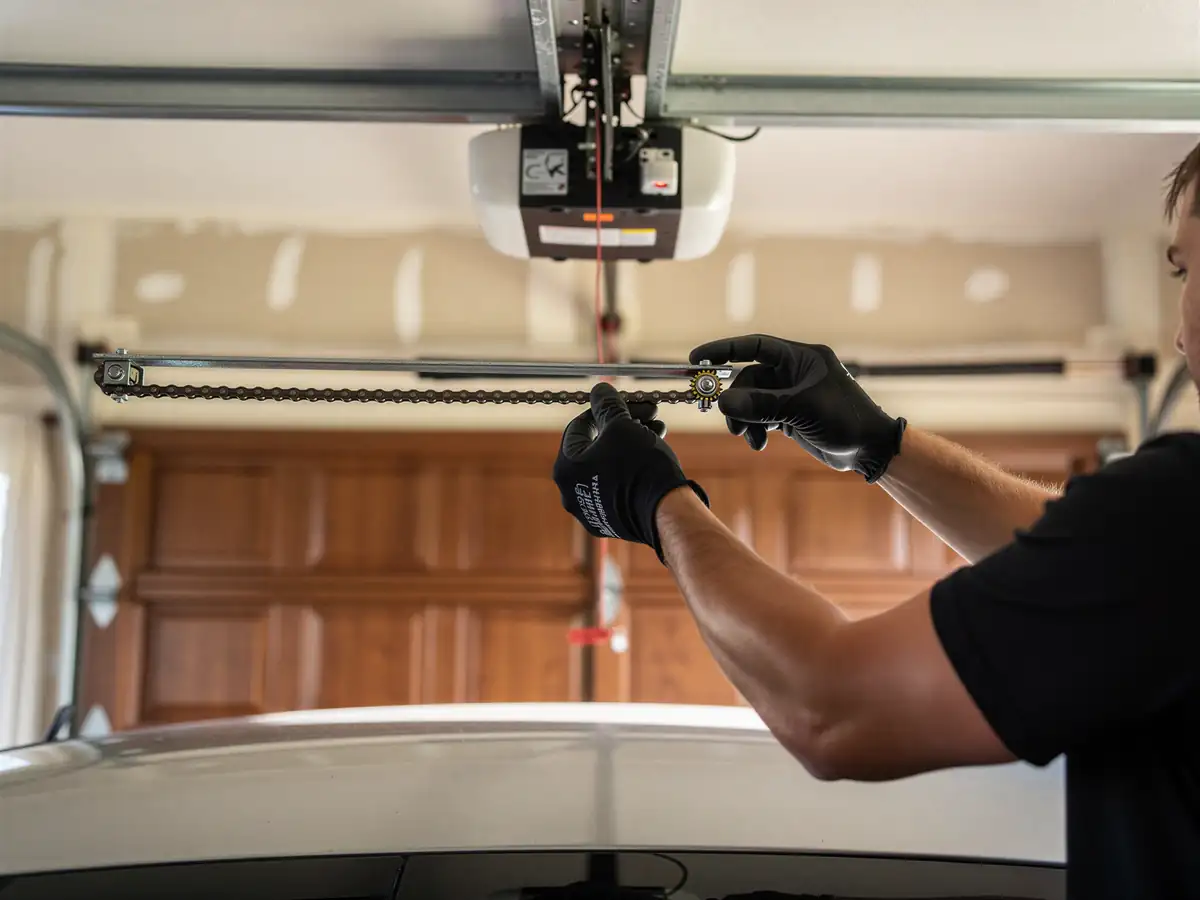
The fault we see most in this area isn't a torn panel or a snapped cable - it's the opener itself aging out. Houses here went up mostly between the late 1990s and the mid-2000s, median right around 1999, which means the openers installed at construction are now twenty to twenty-five years old. At that age the logic board is the first thing to go: random reversals, a motor that hums but doesn't engage, a remote range that's dropped to a few feet. Drive gears made of nylon from that era strip after enough open-close cycles, especially on chain-drive units that saw heavier use. Add in the cold stretches this area gets in winter - moderate but real - and a motor capacitor that's been limping along since fall will often quit outright on the first hard overnight freeze. None of this is damage from a storm or an accident. It's just hardware from one construction window reaching the end of its service life at roughly the same time across the whole area.
How We Fix It
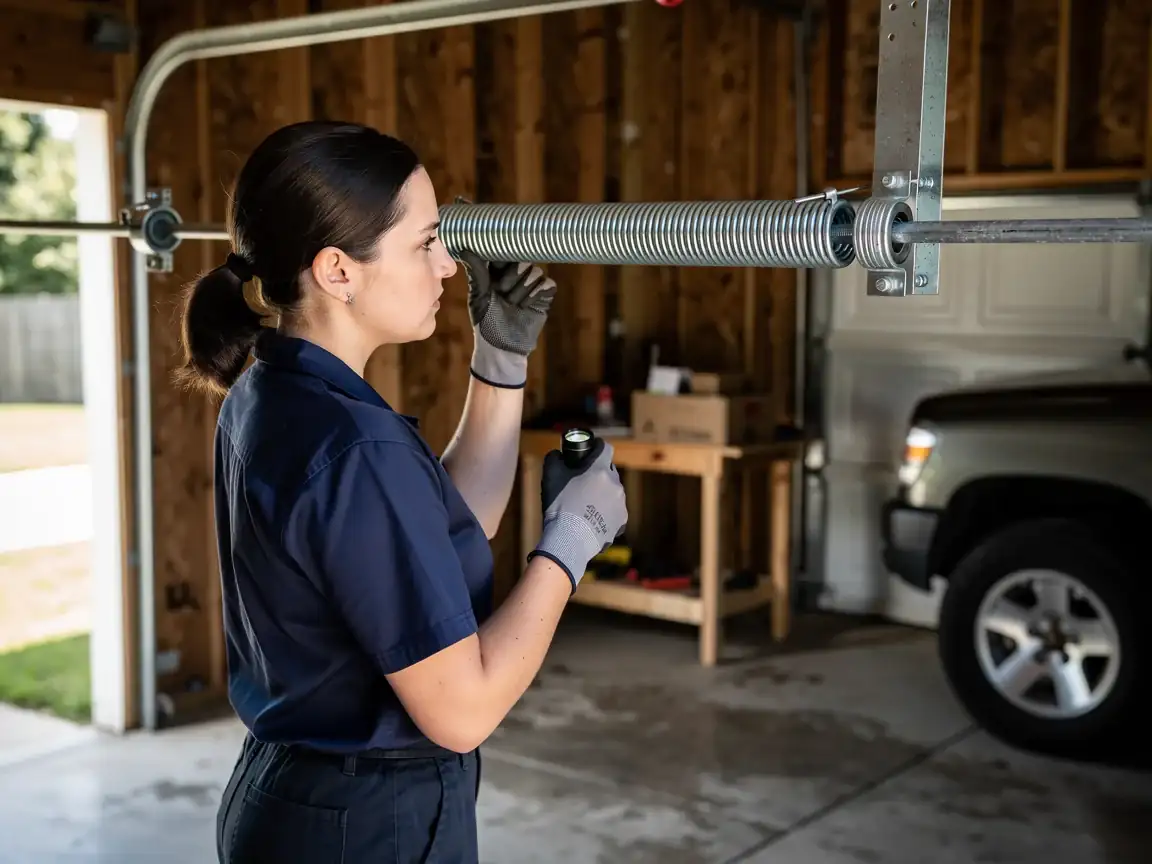
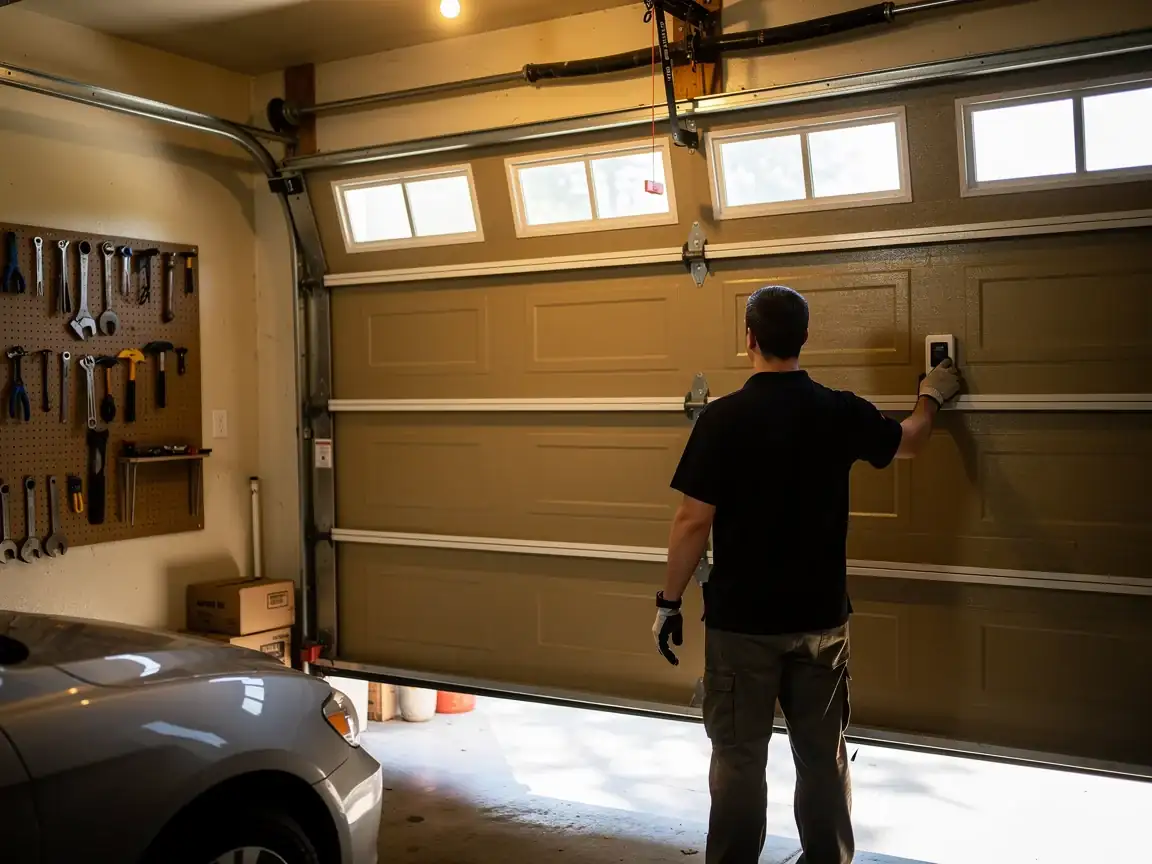
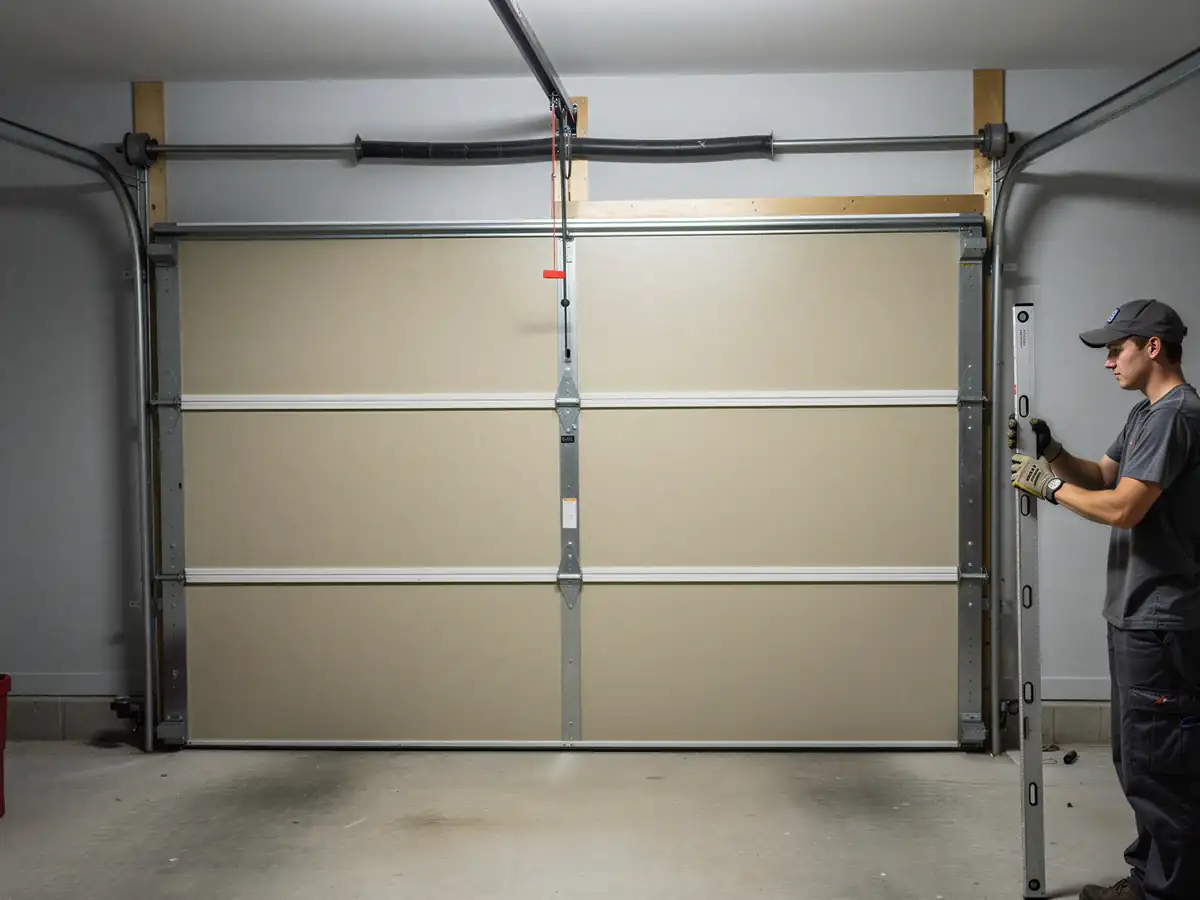
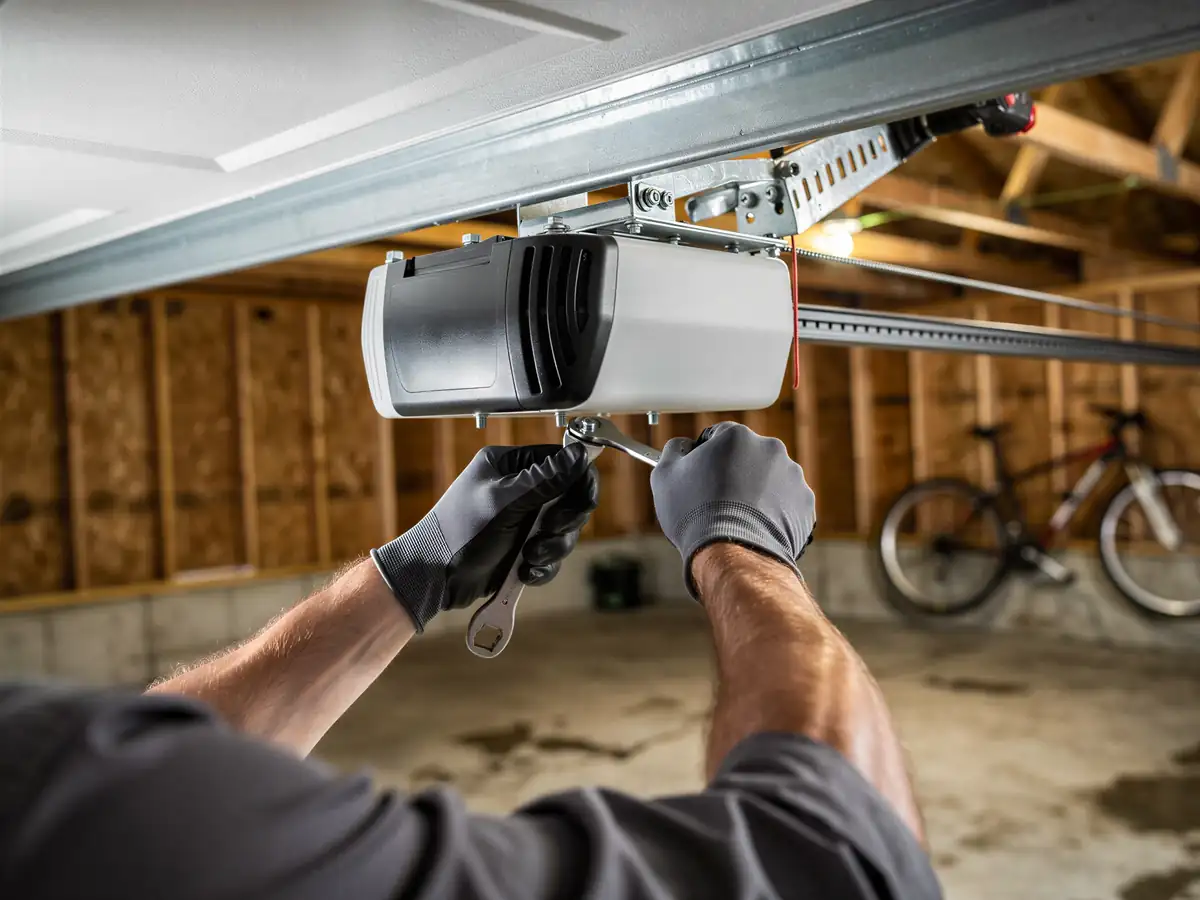
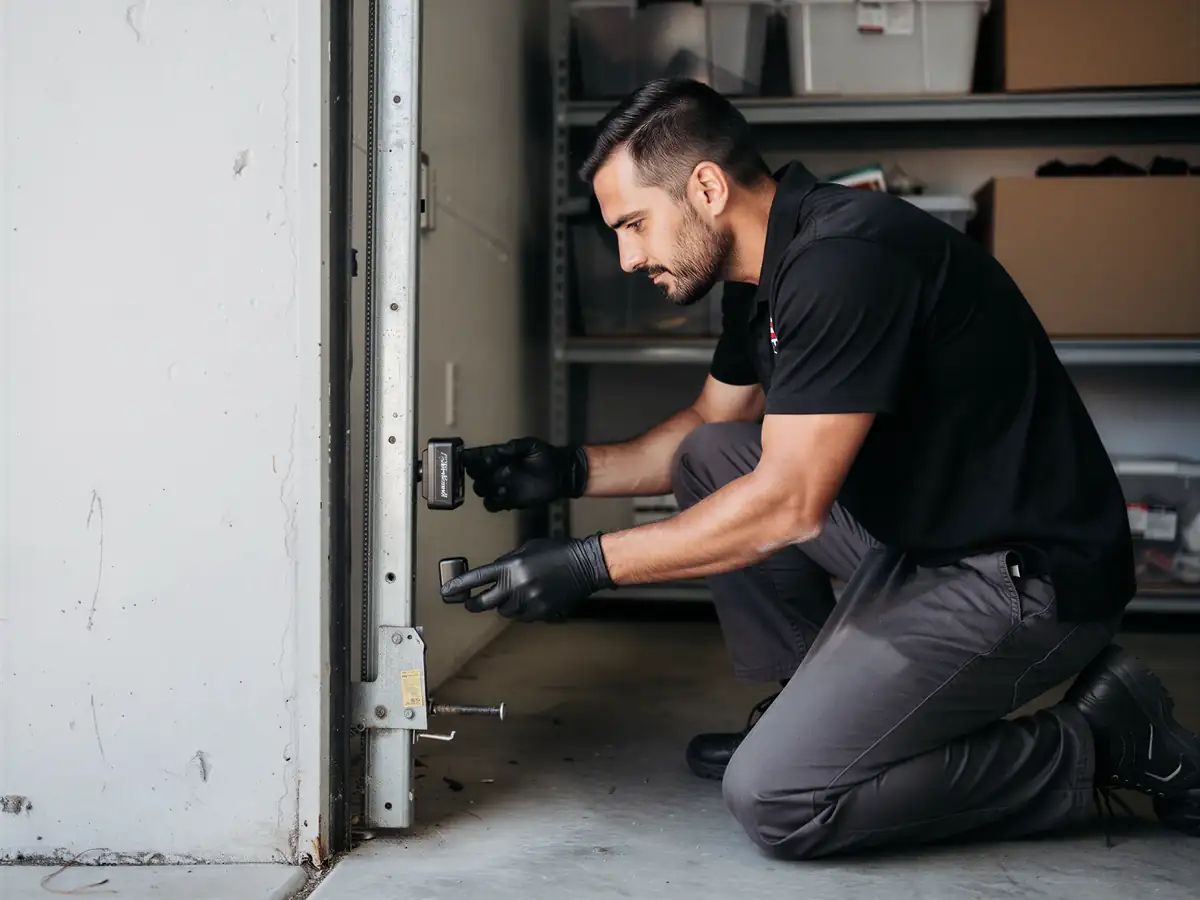
We start by running the opener through its full cycle with the cover off, watching for the specific failure - board fault codes if the model shows them, gear noise, or a motor that strains before it stalls. If it's a sensor or a limit switch, that's usually resolved on the spot from truck stock. A board or gear replacement takes longer because we need to confirm the part matches your specific motor casting, which is more of an issue on openers this old than it would be on a newer unit. If the motor itself has failed and a matching board isn't available, we'll walk you through a straight opener swap rather than force a repair that won't hold. Either way, we test the full travel range and the auto-reverse safety function before we call the job done - that's not optional, especially on a unit this age where the safety reverse is often the first thing to drift out of calibration.