Booking a Visit
We run this job out of Mooresville, about 10 miles up the road
So there's no branch sitting in Enochville waiting on calls - the truck comes from Mooresville every time. That's worth knowing up front: we don't promise a same-hour arrival just because the distance is short, and we won't pretend otherwise.
- 10 miles
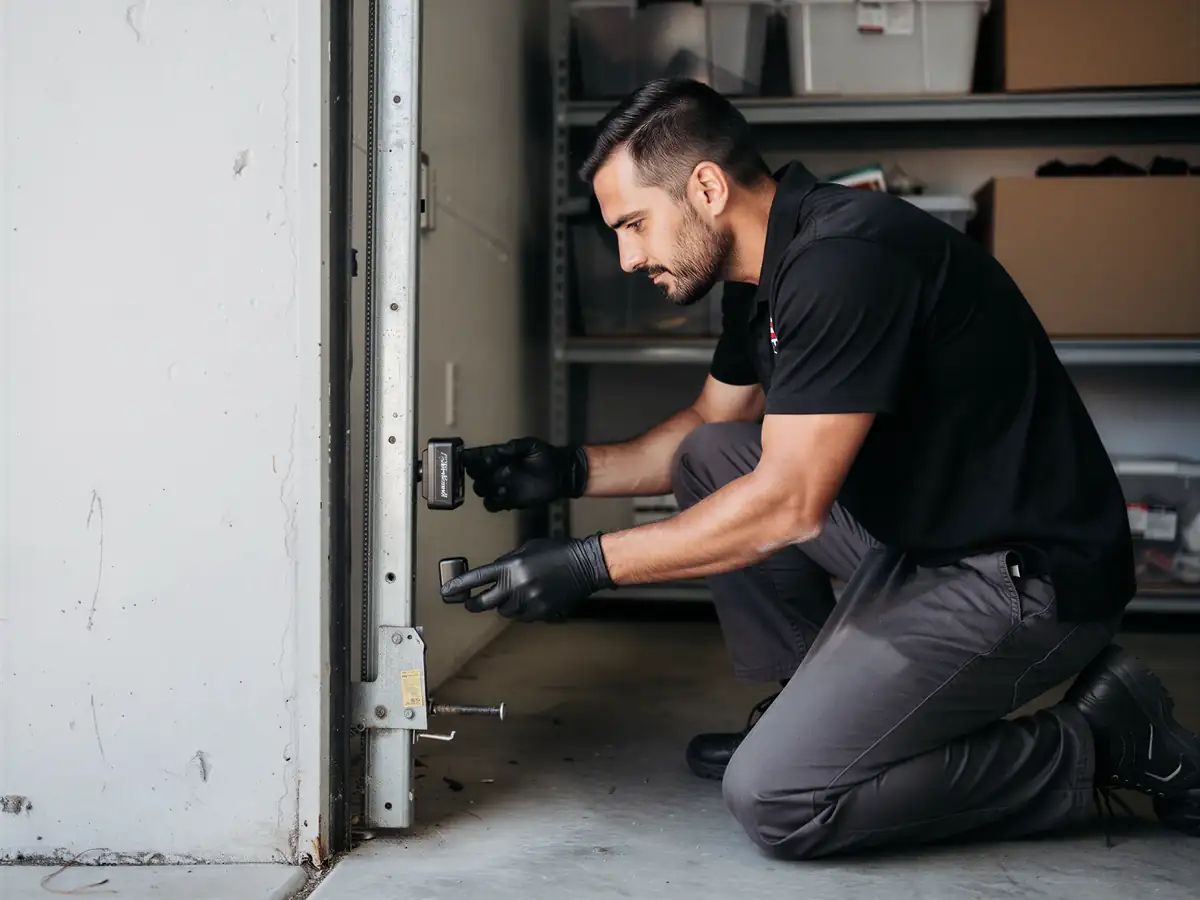
When you call, tell us the door is off track rather than just "not working." That one detail changes what goes on the truck
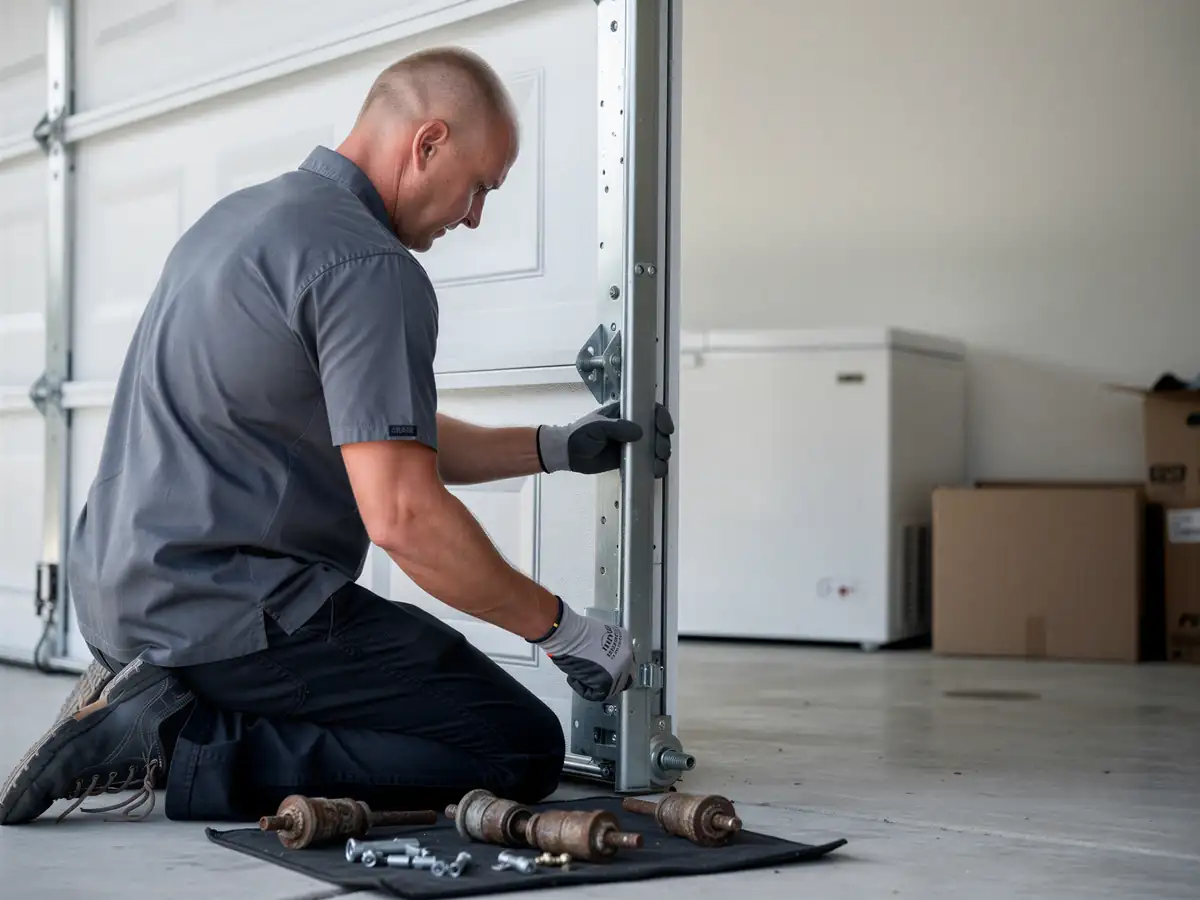
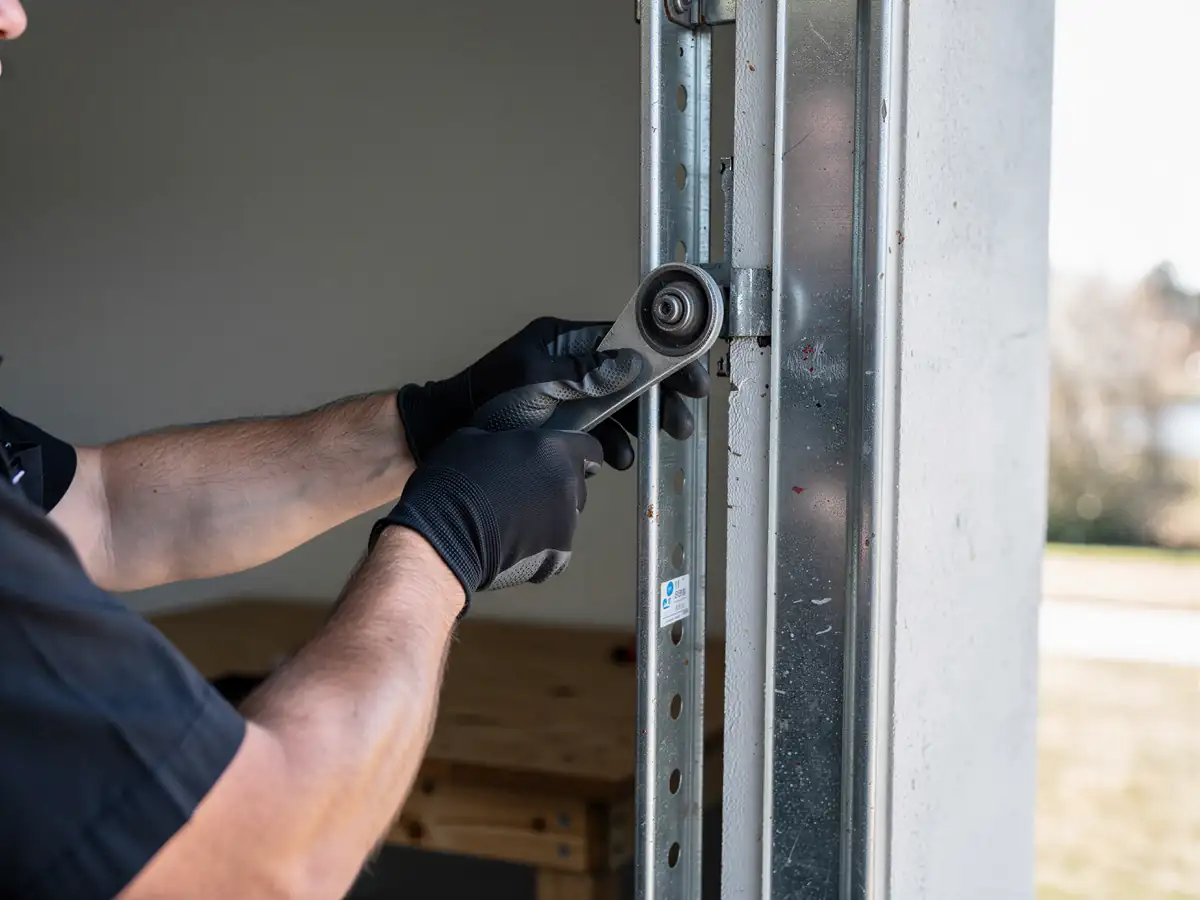
A door that's hopped its track usually means a bent roller, a track bracket that's pulled loose, or a cable that's jumped the drum - and on the older housing stock common here, it often means all three at once because the hardware has been flexing the same way for fifty years.
We'll ask how the door is sitting
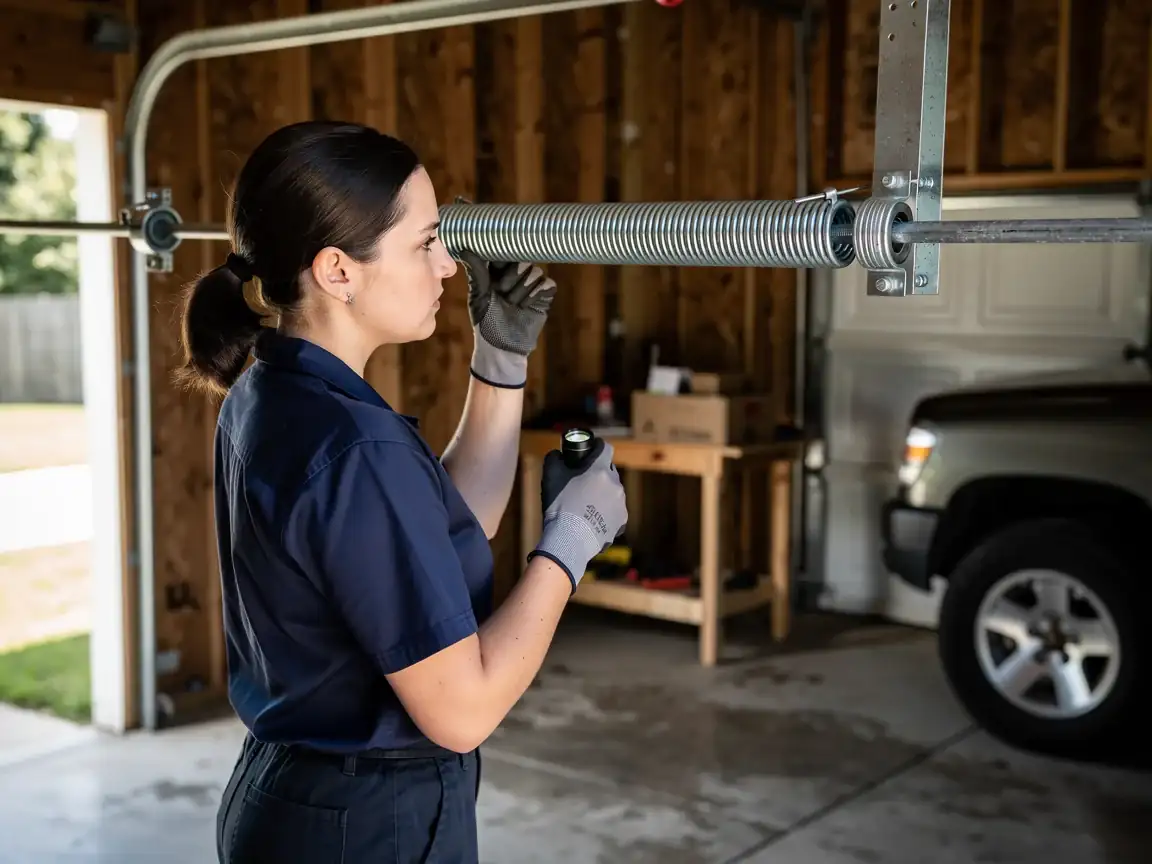
Cocked to one side, stuck halfway, or down and refusing to move at all. That tells us whether it's safe to force by hand before we're on site - on a lot of these older doors, it isn't, because the spring tension is still loaded and a torsion spring under load is not something to wrestle with yourself.
What Can Go Wrong
Most of the roughly 1,314 households in this part of Enochville sit in houses built around 1971, which puts the original garage door hardware - if it's never been replaced - well past the point where parts are a standard stock item. Compare that to the wider Mooresville service area, where the housing median runs closer to 1996 and a quarter century newer. A door on 1996-era rollers and track is a different repair than one on 1971-era rollers and track, and it changes what we expect to find when we open the panel.
On the older stock, the track itself is often the weak point - steel gauge from that era dents and bows more easily, and once a track section bows even slightly, the rollers start climbing out of it instead of riding through it. We also see galvanized cable that's stretched and jumped the drum, and hinges worn enough that the panel racks sideways as it travels, pulling the whole door off line.
On the newer builds mixed into this area, off-track problems trend toward a bent roller from an impact - a car bumper, a bike, a basketball - rather than age fatigue in the steel itself. Either way, forcing the opener to keep cycling a door that's off track usually bends the track further and turns a bracket fix into a full track replacement.
The Cost of This Job
We're not going to put a number here that isn't accurate for your door, and with 32,664 households across the wider service area and a wide spread of door ages, one price doesn't cover the range. A loose bracket and a jumped cable on an otherwise sound track is a short job. A bowed track on a door that's been run off its rollers for a week is a longer one, because by then the opener, the rollers, and sometimes the panel itself have taken damage from being forced.
With median household income in this part of Enochville at $65,328 - lower than the $73,393 median across the broader service area - we try to be straight about when a repair is worth doing versus when the track hardware is old enough that patching one section just moves the failure to the next section. If your track dates back to the original 1971-era install and one side is already bowed, replacing both tracks at once is often cheaper over the next few years than repairing one side now and the other side next winter.
One honest limit: if a part is no longer made for your door's era, we tell you that rather than stall you with a guess on when it'll show up.
Why This Fails Locally
This area sits in a cold-moderate climate band
Which means real seasonal swings - steel track and galvanized cable both contract in cold weather and expand in heat, and on hardware already fifty-plus years old that cycling adds up. A track bracket that's been loosening slowly since the Carter administration doesn't usually fail on a mild day; it fails on the first hard freeze or the first stretch of summer heat, when the metal is already at one extreme and a slammed door pushes it past the edge.
Newer doors elsewhere in the service area
Built to door and track specs from the 1990s or later, tolerate that seasonal flex better because the steel gauge and the roller design have both improved since 1971. That's the real reason an off-track call in this part of Enochville is more often a track-and-bracket job than a simple re-roll: the hardware is old enough that a seasonal temperature swing, not a single impact, is what finally pushes a half-loose bracket the rest of the way out.